
Hidden Gem of Dalmatia: Why You Must Discover the Zadar Hinterland

When you think of Dalmatia, the first image that probably comes to mind includes turquoise sea, the scent of pine trees, and the sound of cicadas as you enjoy a coffee on the promenade. But what many forget – or better yet, are only just beginning to discover – is that the true charm of Dalmatia often doesn’t lie on the coast, but just a few kilometers inland, in the quiet, green corners of the Zadar hinterland. This landscape, which combines the scents of childhood, tradition, and authentic Dalmatian hospitality, is becoming an increasingly important destination for travelers who seek more than postcards and beaches.

In recent years, the Zadar hinterland has been experiencing its own tourist renaissance. In the rural landscapes of Ravni Kotari, Bukovica, and the fertile plains around Benkovac, family farms, wine stories, museums, and agritourism are flourishing, offering what you can’t find in crowded tourist hotspots: silence, sincere people, and flavors that take you back to childhood. If you’ve had enough of fast-paced, superficial vacations, if you want to know who cooked your soup and what the olive tree looks like that gave you the oil on your salad – the Zadar hinterland is waiting just for you.

What does the Zadar hinterland include?

The Zadar hinterland covers a wide area between the Adriatic coast and the Velebit mountains, stretching from Ravni Kotari and Bukovica, through the Benkovac region, all the way to the mountain foothills. Here, time flows more slowly, people smile and have time to talk, and every bite of food or glance at the landscape tells a story.

This is a region that successfully combines rich cultural and natural heritage with a growing offer of sustainable tourism. The villages preserve the spirit of the past through architecture, customs, and everyday life, while at the same time offering modern experiences to visitors who want more than a typical holiday.
Authenticity and Flavors on the Family Farms of the Zadar Hinterland

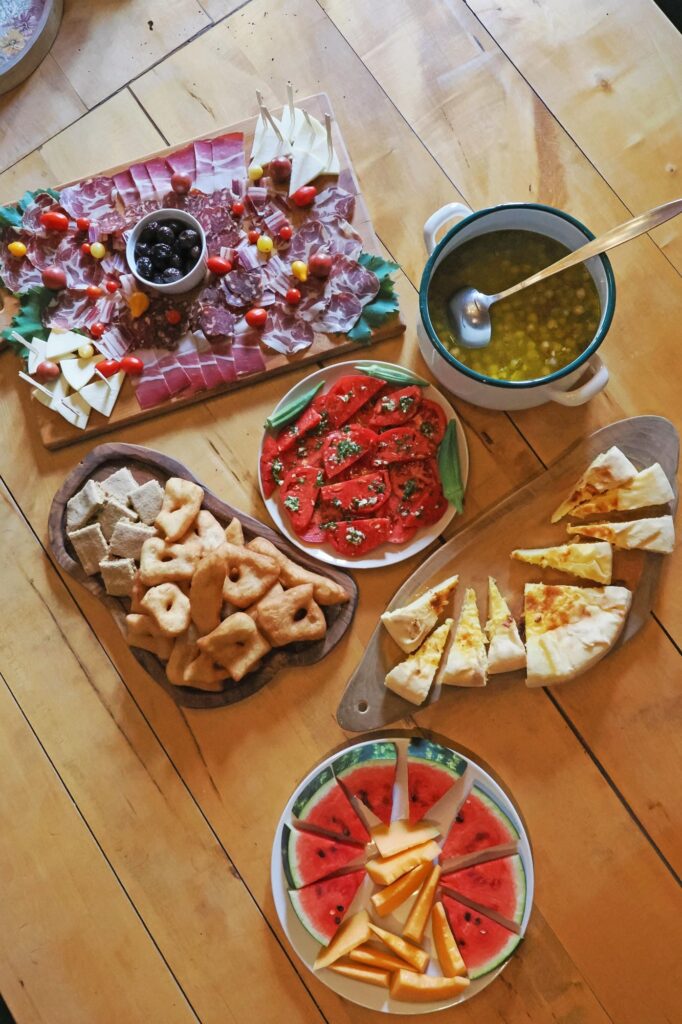
If you want to truly understand this region, the best place to start is – at the table. More precisely, at a home table full of local specialties, served on the terrace of a family farm (OPG) with a view of vineyards or olive groves. In the Zadar hinterland, especially between Biograd and Benkovac, you’ll find many farms involved in the Welcome – taste & buyinitiative, which offer exactly that: experience, flavor, aroma, and story.

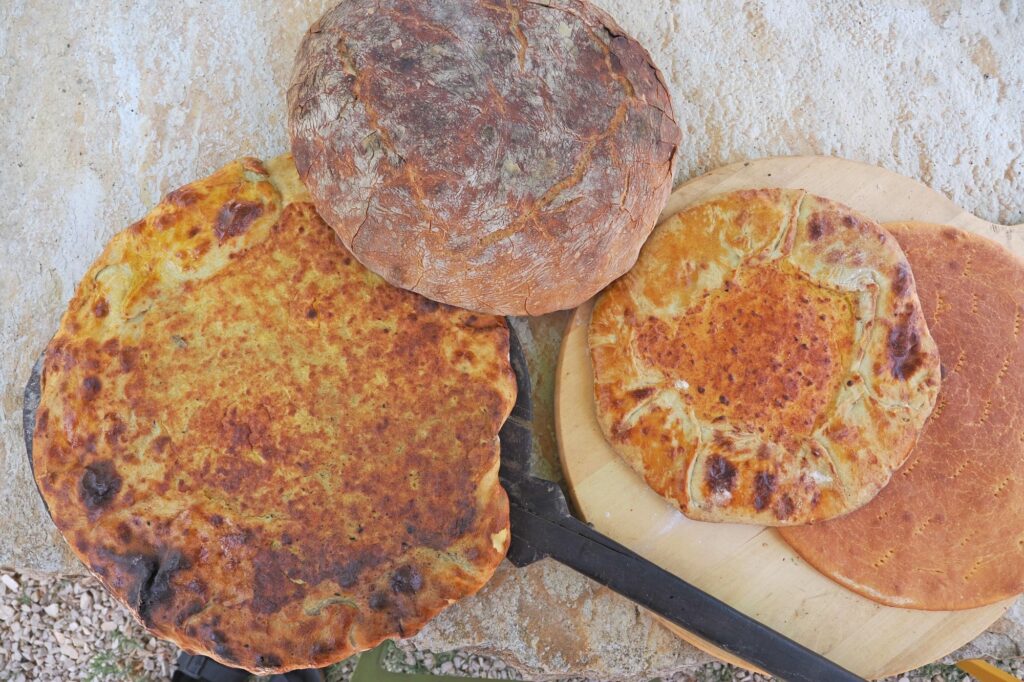
In Gornji Ceranj, you’ll find the Mate Gašpar farm, where the entire family welcomes you – literally. Their five sons help serve dishes such as lamb and veal under the peka, prisnac – a traditional savory cheese pie – and corn priska, which is not baked, but sung. Because here, every dish has its rhythm, and every dinner ends with laughter.
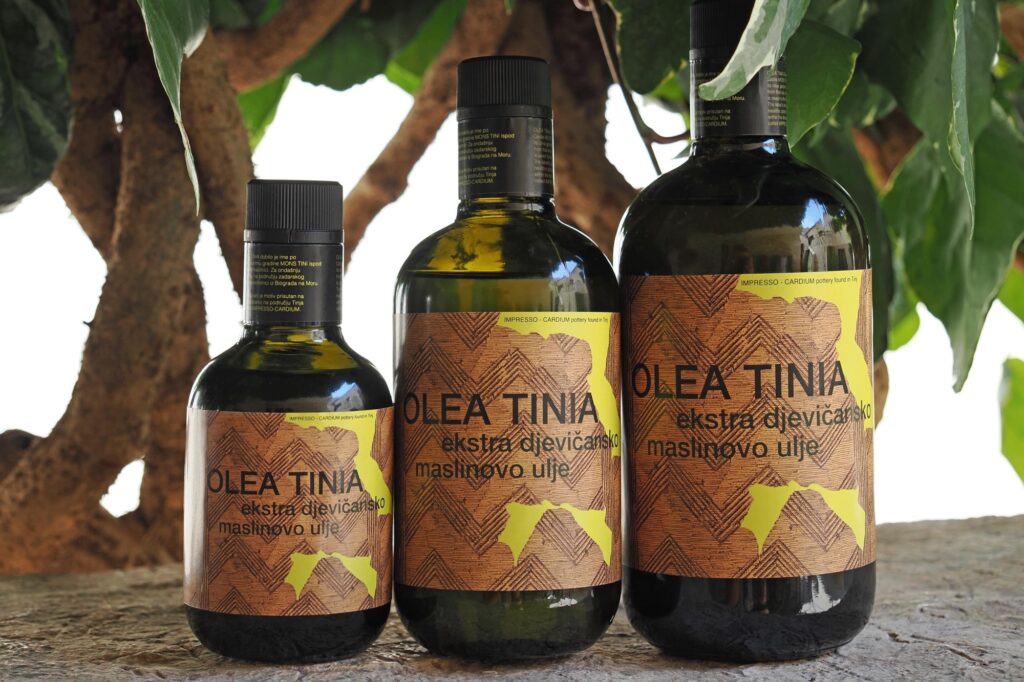
Not far away, in the village of Polača, Milenko Zagorac’s farm produces “Olea Tinia” oil, the result of devoted work in the olive groves that stretch across the slopes of Tinj. The tasting room is modernly designed, but the warmth with which the hosts welcome you recalls old times. Vesna Zagorac serves olive oil, cheese, pancetta, homemade bread, and wine with love and pride, while telling the kind of unforgettable family story that stays with you.
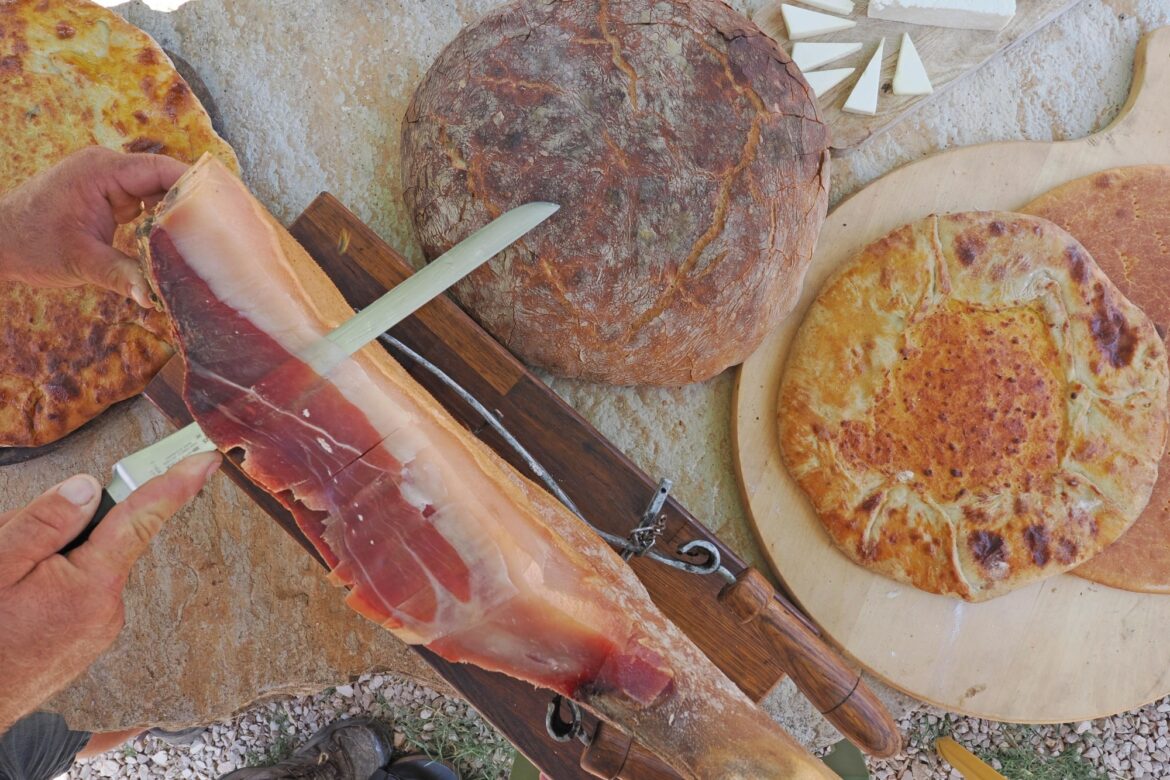
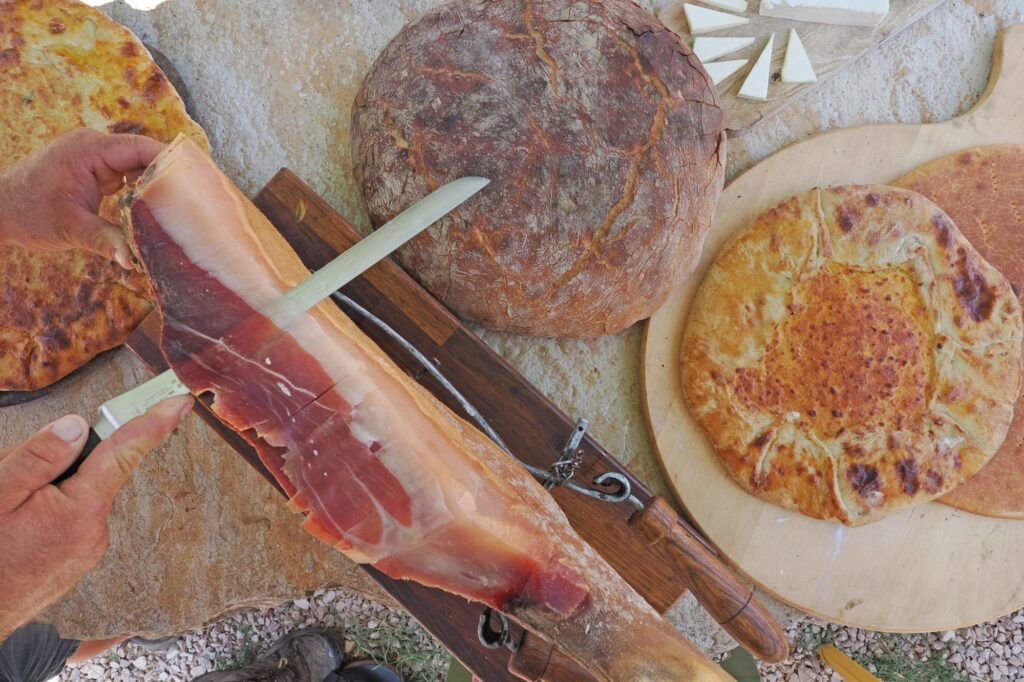
To round off this authentic gastro journey, stop in Šopot near Benkovac at Lola’s Vatrenica, an agritourism run by Doris Ćusa, one of the daughters of the legendary Lola. Alongside freshly baked bread, homemade cured meats, and the famous Benkovac prisnac, she shares stories about her father, about tradition, and about life here. At the end, I even met donkeys that provide milk – something I didn’t expect, but gladly tried. And yes, surprisingly, it was delicious.
The Best Wines of the Zadar Hinterland

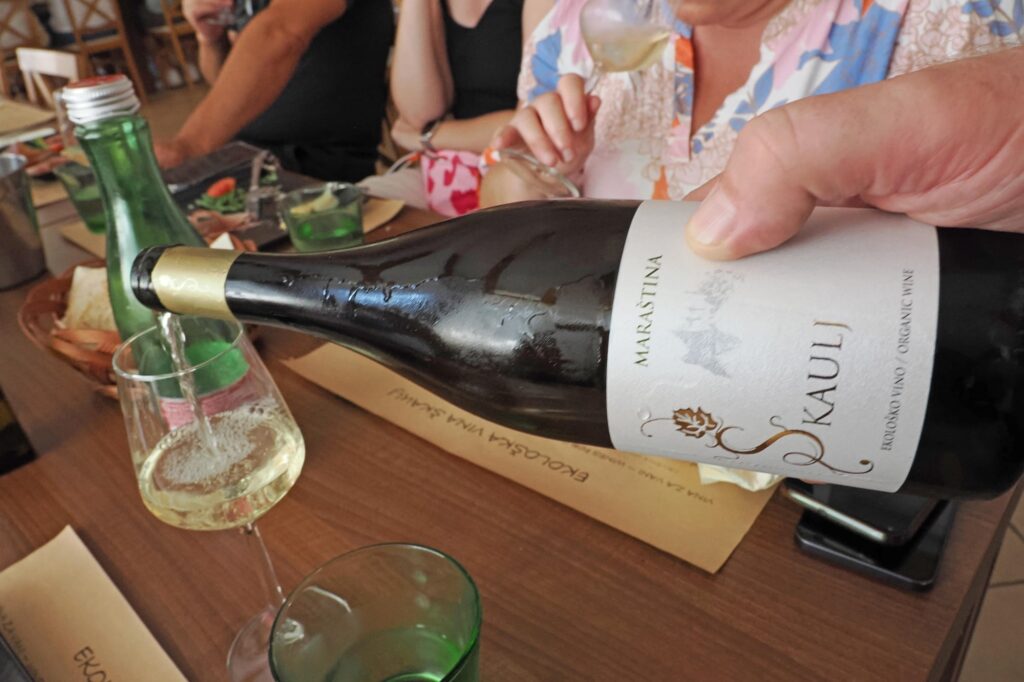
Wine lovers don’t need to look any further, as the wineries of this region seriously compete on Europe’s wine map. Škaulj Winery in Nadin offers certified organic wines and a unique tasting experience in the fairytale setting of vineyards. The winery also gained recognition thanks to a visit by the Swedish royal family, and the wine “Royal,” named after the king, proves that even small vineyards can reach international heights.
Benkovac: A Blend of Market, Museum, and Character

If your visit coincides with the 10th of the month, don’t miss the Benkovac Fair. It’s the most famous fair in this part of Croatia, where thousands of people come to buy, sell, browse, and chat. Everything is on offer – from antiques and handicrafts to prosciutto, vegetables, and even tractors. A new covered space has given the fair fresh momentum, but the atmosphere remains the same – dynamic, authentic, and full of life.

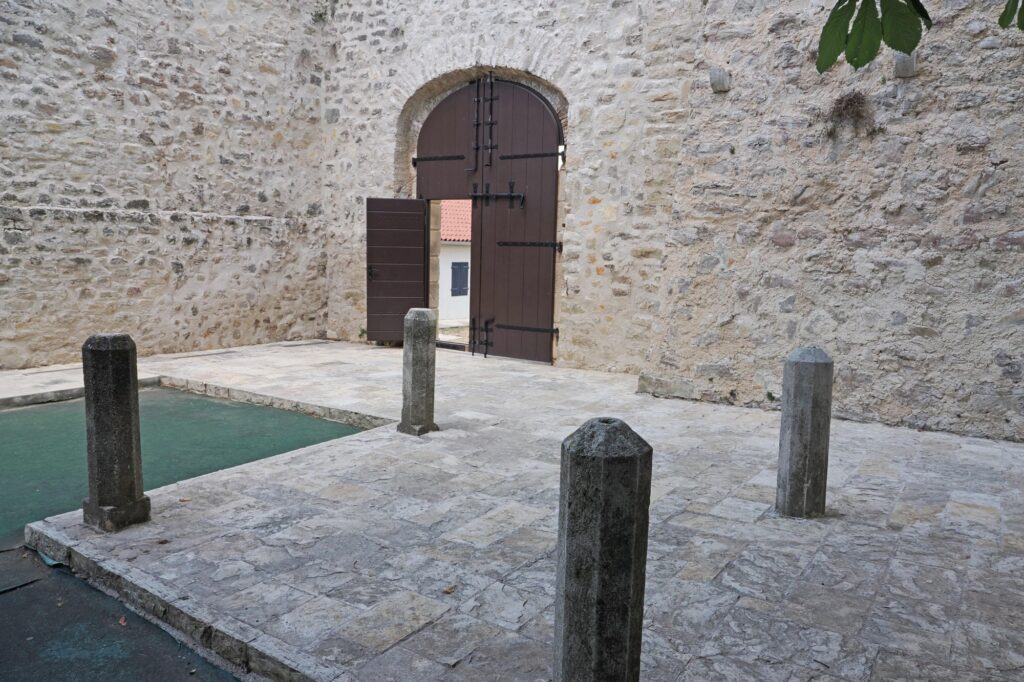
In the center of Benkovac, you’ll also find the Heritage Museum, which preserves everyday objects, costumes, tools, and the history of the region. If you want to understand why people here speak with heart and taste with soul, step into the past. The museum is located in the impressive medieval fortress Kaštel Benković, built on a hill above the town. This fortress, which changed owners and functions throughout history, now houses a rich collection of archaeological, ethnographic, and cultural-historical items from Ravni Kotari. The exhibition is particularly engaging, guiding you through hundreds of years of local history.

Perhaps, just like me, you’ll feel as though you’ve stepped into a real time capsule of the Zadar hinterland. In the archaeological collection, housed in the castle tower itself, you’ll find artifacts from archaeological sites such as Asseriaand Karin, stone relics, and a lapidarium that literally tells the story of millennia of human settlement in this area.
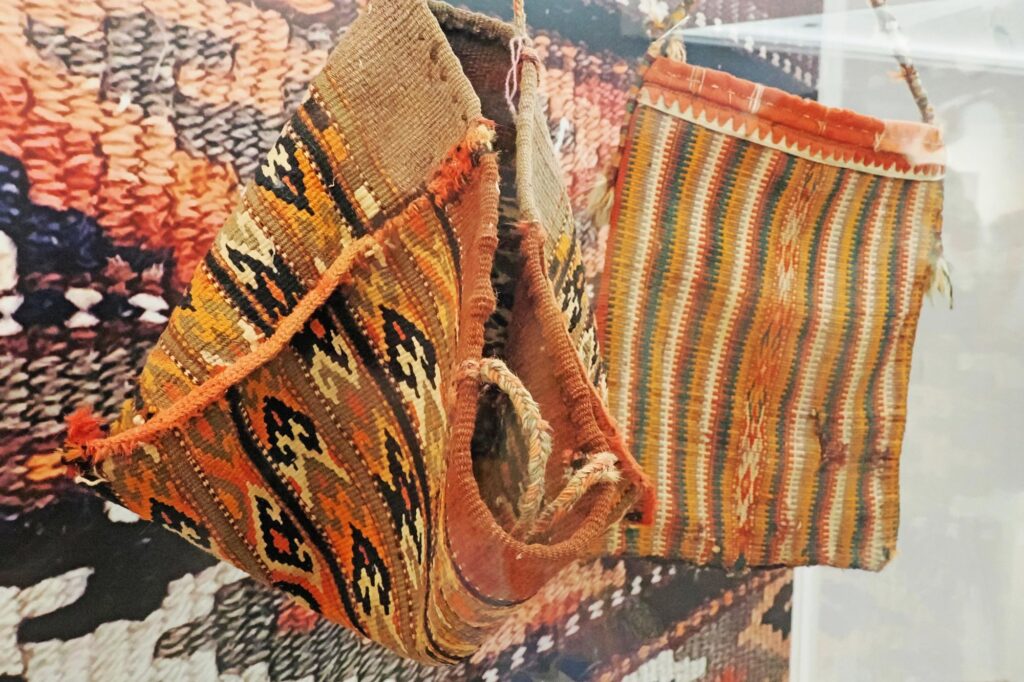
The ethnological collection reveals how people lived here a hundred years ago – through traditional costumes, old tools, and everyday objects, you can sense the spirit of bygone times. The cultural-historical and documentary collection additionally offers insight into Benkovac as an important trading and strategic center that, over the last two hundred years, changed hands between at least ten states – each leaving its mark.
Particularly impressive is the stonemasonry collection, honoring the craftsmanship that made Benkovac stone famous far beyond the region. The museum also preserves a collection from the Homeland War, a rich photo archive, and a library. But perhaps the most unique and photogenic exhibit awaits at the very top of the castle: Da Vinci’s three-barreled cannon from the 15th century, the only one of its kind in the world, cast according to the original sketch of the great genius. In Benkovac, history truly has many faces – and each tells its own story.
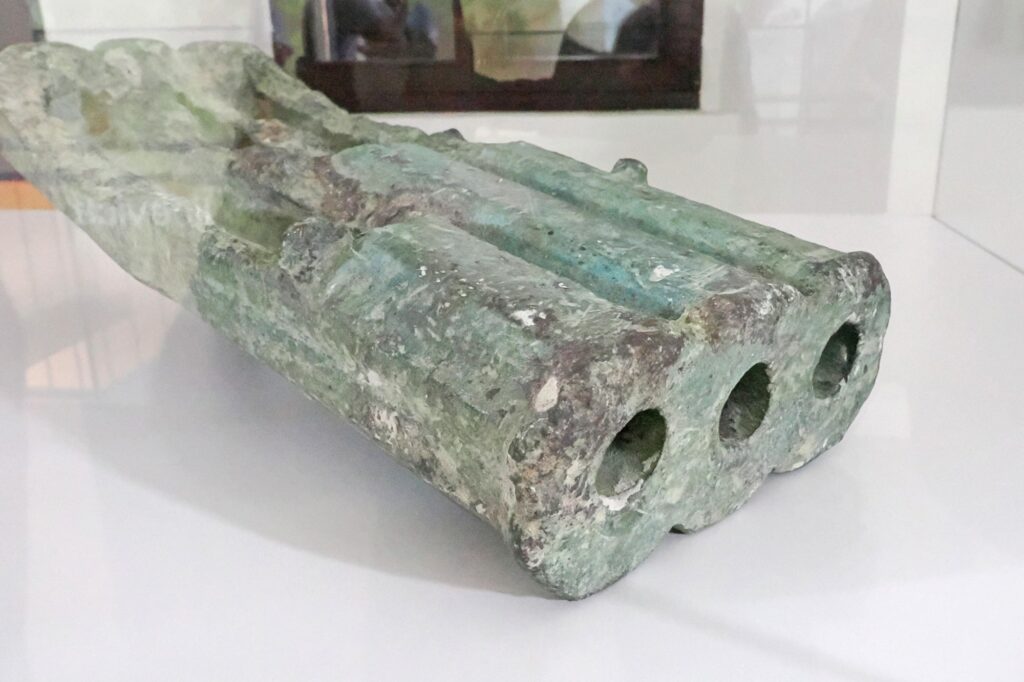
The museum was founded in 1983 and plays an important role in preserving the identity of this region, which, throughout its turbulent past, was at times an Ottoman fortress, an Austro-Hungarian stronghold, and a place of fierce local resistance. Thanks to its exhibits, you’ll better understand why Benkovac is not just a transit stop on the way to the sea, but a place worth exploring more deeply – through its people, heritage, and the stories that echo through the stone walls of the Kaštel.

Cerovačke Caves: An Underground Spectacle

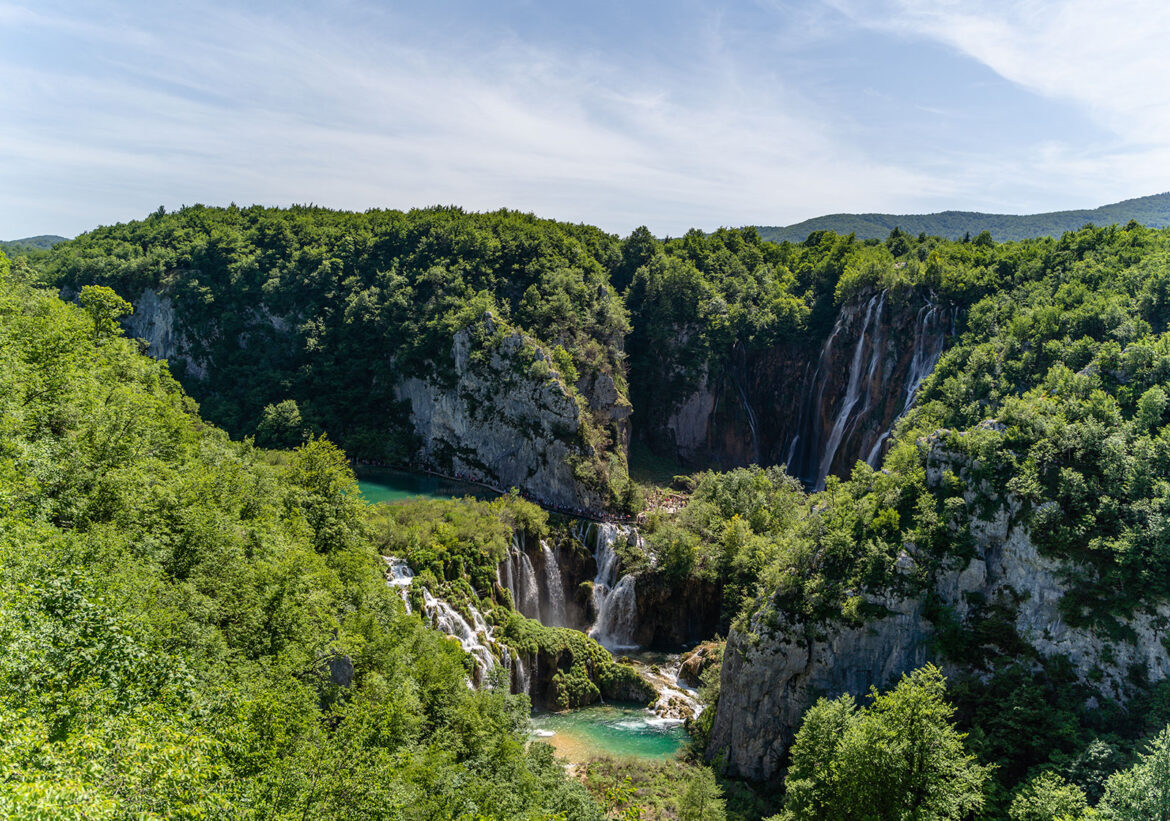
When summer shows its hot face, you can cool off in the shade of the Cerovačke Caves. If you’re fascinated by places where nature whispers its ancient stories, these caves are a destination you must not miss. Located in the southern part of the Velebit Nature Park, above Gračac, they are the largest speleological site in Croatia open to the public – and a true time machine into the distant past.
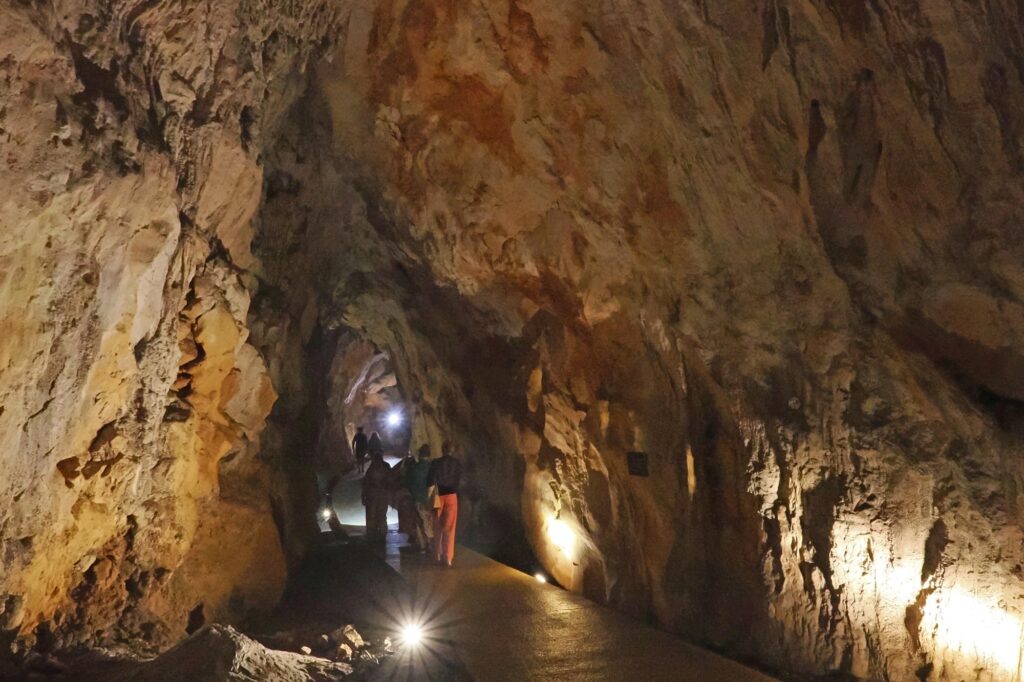
Although the caves are a “cool” attraction in every sense of the word, the path to them is anything but easy. The climb to the entrance is steep, rocky, and demands proper footwear – so forget flip-flops. Bring a bottle of water, a spare shirt, and definitely a jacket or warm hoodie, as the temperature inside the cave is only 6°C year-round. The Cerovačke Caves consist of three interconnected systems – Lower, Upper, and Middle – which together form an underground labyrinth over eight kilometers long. Not all passages are open to visitors, but what is accessible will certainly leave you in awe.

The Zadar Hinterland

Here, with a professional guide, you literally step back thousands of years – through natural halls adorned with stalactites and stalagmites, but also through traces of life etched into the rocks of this karst world. In the caves, archaeologists discovered bones of prehistoric animals and evidence of human presence from long-forgotten eras. Walking through this underground world, I felt as though I was walking through memories older than anything I had ever known.

The Cerovačke Caves are not just a geological wonder. They are a reminder of how patient, powerful, and fascinating nature can be. And you, as a traveler through time, are given the chance here for quiet admiration and learning.
Sea Quality in Pirovac: Excellent for Summer Swimming!

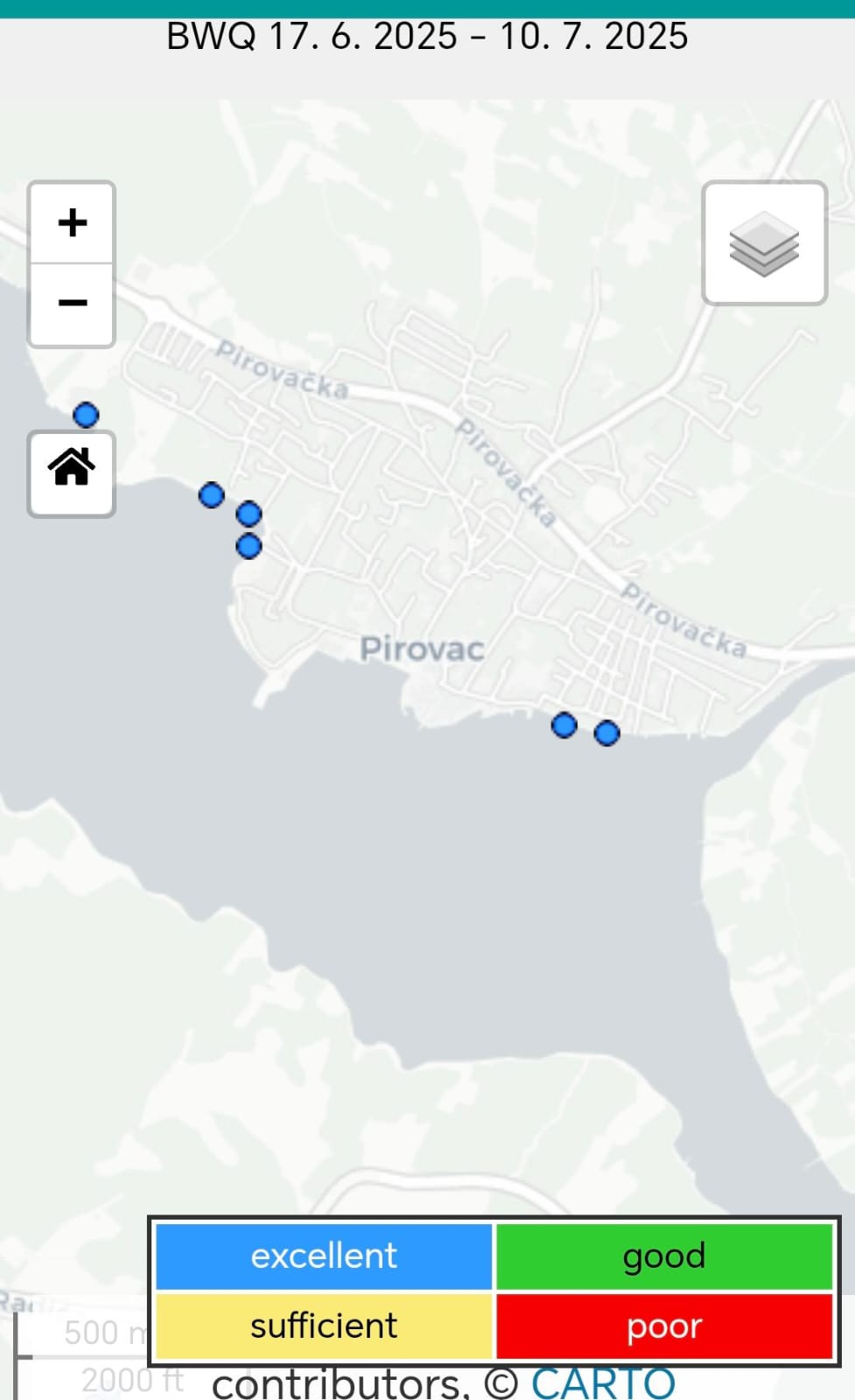
Measurement date: 17 June 2025 – 10 July 2025

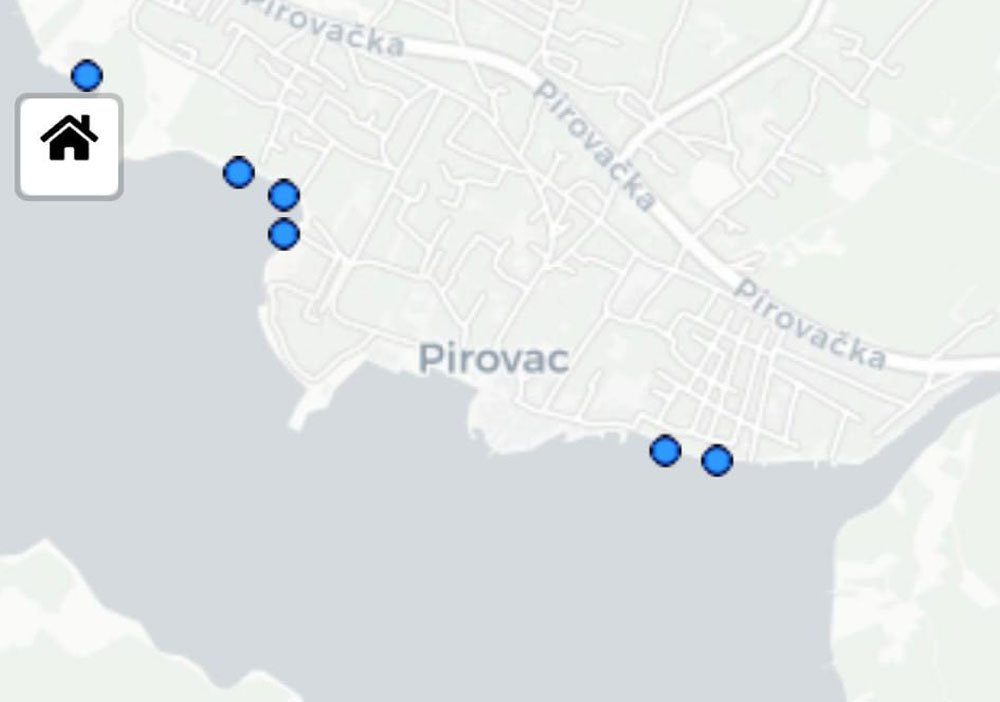
If you are planning your summer holiday in Pirovac, we have great news for you. The latest bathing water quality (BWQ) measurements showed that the water at all the main beaches around Pirovac is excellent (marked in blue on the map).

This means that swimming in the sea is safe, refreshing and ideal for children as well. The Pirovac area is therefore a perfect place for relaxation, beach days and water sports.

Pirovac offers not only a beautiful coastline but also clean sea – come and enjoy it with peace of mind!

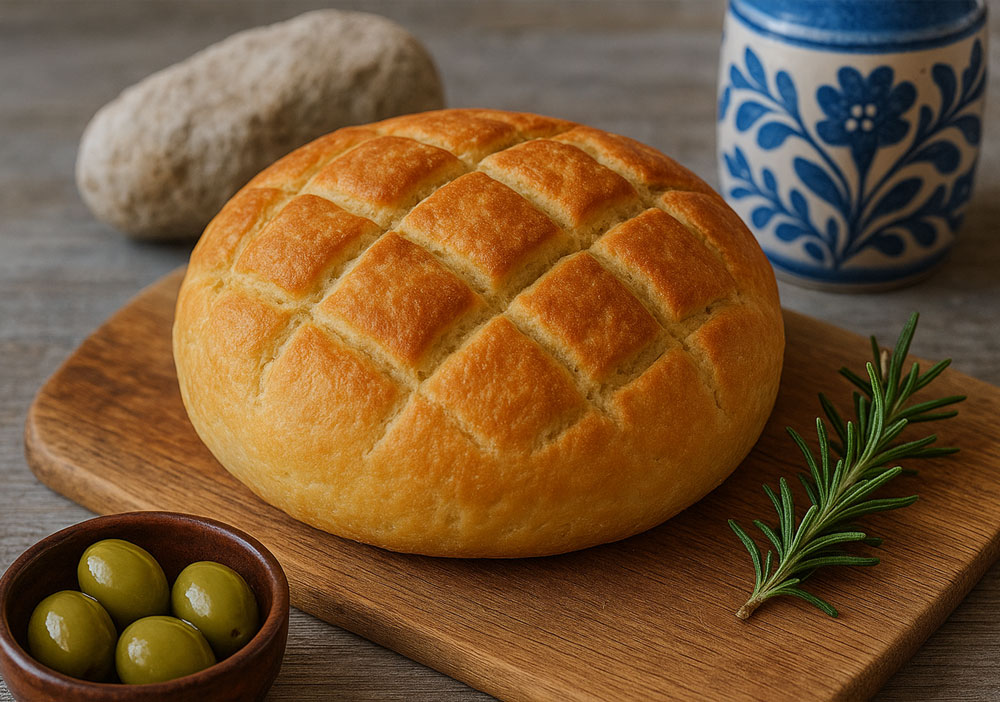
Yes, pogača is right at home in Croatia: A traditional bread that tastes like summer by the sea.

When you think of the smell of coastal cuisine, you might be surprised to find that among the seafood and olive oil, Croatia hides a true treasure – pogača. This simple yet exceptional type of bread is beloved not only as a side dish but also as a standalone meal. And the best part? You can make it at home too.

🥖 Traditional Pogača Recipe

Pogača is a soft, fluffy bread made from simple ingredients: flour, yeast, salt, water, and olive oil. After it rises, it is shaped into a circle or flatbread, decorated (e.g., with seeds, salt, or herbs), and baked until golden brown. The result is a bread that smells like the Mediterranean and perfectly complements any dish – from grilled fish to fresh salads.

🍽 Pogača as a Souvenir on Your Plate

If you visit Croatia, you’ll surely encounter this bread in various forms – sometimes simple, like a traditional wheat loaf, and other times flavored with herbs, cheese, or olives. In some regions, it’s even served at weddings or family celebrations as a symbol of hospitality and abundance.

🧄 Pogača Has a Long History

The origins of pogača date back to ancient times – to ancient Greece and Rome. Its recipe gradually spread throughout the Balkans and is now a cornerstone of local gastronomy. Thanks to its simplicity and adaptability, it has found its place in every corner of the Mediterranean.

🌿 Try It at Home

If you want to relive your Adriatic holiday, bake your own pogača at home. It’s easy to make, and the result will please everyone. You just need a few basic ingredients, some time, and your kitchen will instantly transform into a Mediterranean tavern.

✨ A Small Thing with Great Meaning

Pogača is more than just bread. It’s a symbol of tradition, hospitality, and the simple joy we experience around the table with loved ones. So, why not bring a little piece of Croatia home with you?

What is bonaca and why is it perfect for a holiday in Croatia?

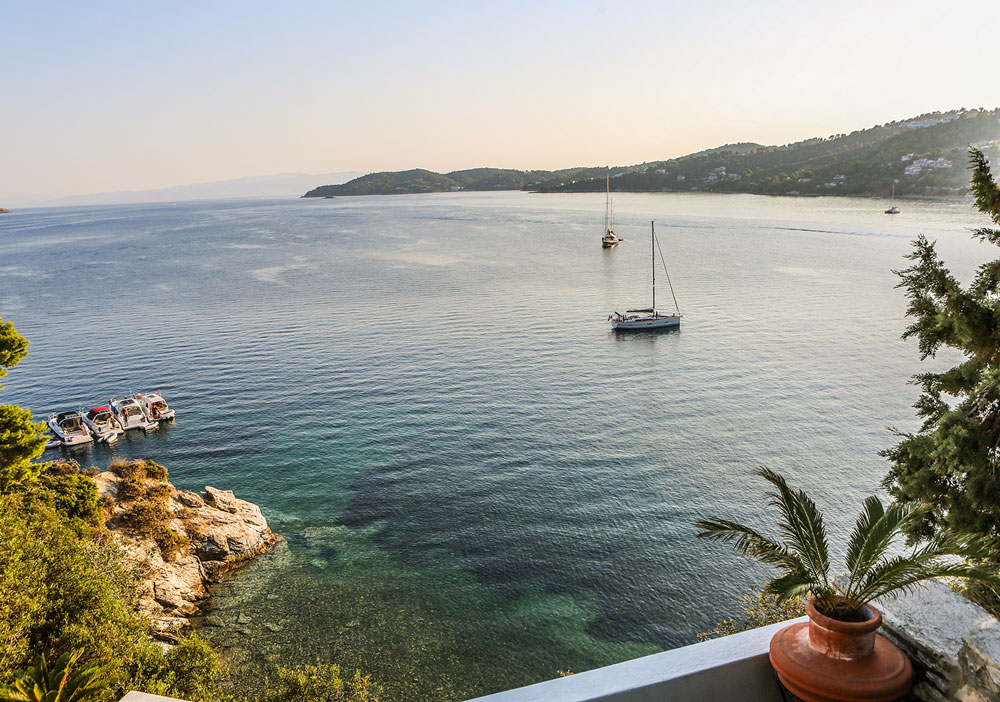
If you’re planning a holiday in Croatia by the sea, you may have already heard the term bonaca. This word is commonly used in the country to describe the calm, windless weather typical of the summer months on the Adriatic Sea. For tourists, sea lovers, water sports enthusiasts, and those looking to relax on a boat, bonaca is synonymous with the perfect day.

What does bonaca mean?

Bonaca refers to a period when the sea is completely calm, with no waves or wind. The air is warm, the sea is as smooth as a mirror, and the conditions are ideal for relaxation. This phenomenon typically occurs during the hot summer days and can last for several hours or even the entire day.

Characteristics of bonaca:

  • Calm sea: Due to the absence of wind, the sea surface is exceptionally calm – perfect for swimming, paddleboarding, or relaxing on a boat.
  • Warm and stable weather: Bonaca arrives during heat waves, with clear skies and rising temperatures – typical for the holiday season.
  • Relaxation without disturbance: With no wind and waves, you can enjoy uninterrupted relaxation by the sea or on the terrace of your apartment.

Impact of bonaca on tourists and activities:

  • Water sports and recreation: Although bonaca is not ideal for sailing (since there’s no wind to power the sailboats), it’s perfect for paddleboarding, swimming, snorkeling, and chilling on a boat.
  • Laid-back atmosphere: For many, bonaca symbolizes the ultimate summer relaxation. It’s ideal for families with children, couples, or individuals seeking peace and stability.
  • Safety at sea: With no waves or strong winds, conditions for swimming and boat trips are extremely safe.

Where and when to experience bonaca?

Bonaca is most commonly found:

  • During the summer months (June to September),
  • In the northern Adriatic, especially around cities like Zadar, Rijeka, and other areas along the Croatian coast.

Connect bonaca with the perfect accommodation

If you’re looking for accommodation in Croatia by the sea, follow the weather forecast – the bonaca period is ideal for relaxation, photography, boat trips, or simply enjoying the sunset with the sound of cicadas.

Bonaca is not just a meteorological phenomenon. It’s an atmosphere. It’s the type of day when you slow down, take a deep breath of salty air, and suddenly realize that this is exactly what you needed. 🌞🌊

Sea Sponges from the Adriatic: A Holiday Curiosity and Souvenir from Croatia

When you’re enjoying a holiday by the Adriatic Sea, you might not realize that fascinating creatures live beneath the surface – sea sponges. These natural organisms are not only important to the ecosystem but are also known in Croatia as a traditional souvenir.

What is a sea sponge?

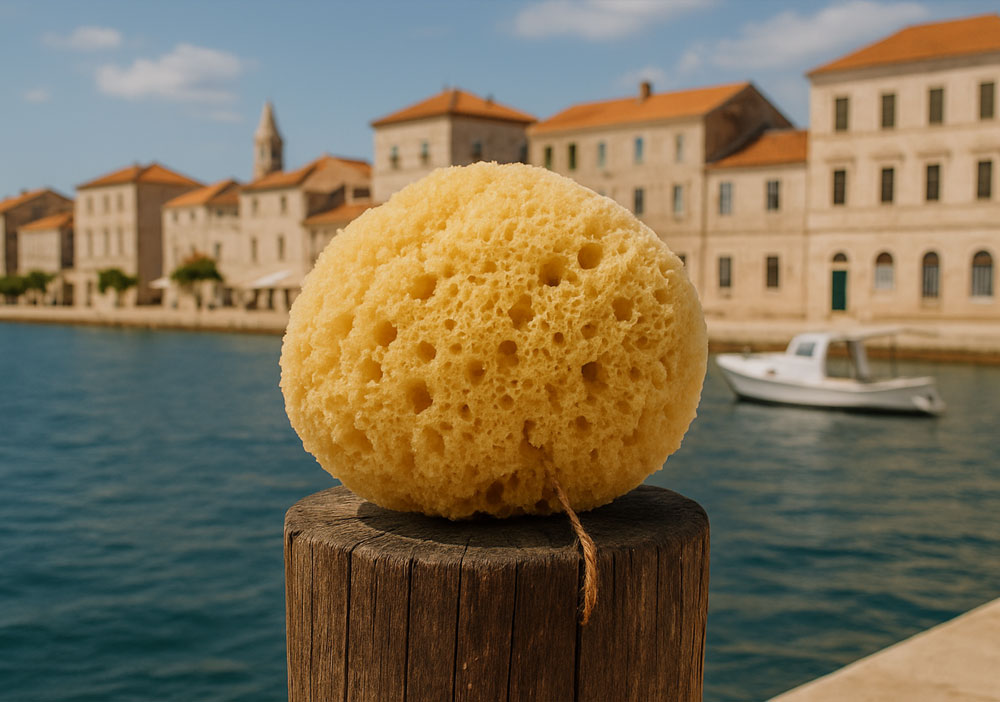
Sea sponges are natural organisms that live in seas and oceans and belong to the group of fungi (Phylum Porifera). They are interesting due to their diversity – they come in various shapes, sizes, and colors. Their bodies are porous, meaning they contain many small openings and channels through which water constantly flows.

How do sea sponges live?

These organisms feed by filtering microscopic particles from the water – they are filter-feeders. Water enters their body through small pores, flows through the channels, and exits the body of the sponge. This system allows them to gather nourishment while helping to clean the seawater.

What are they made of?

The body of a sea sponge is made up of collagen fibers, silicates, or calcium parts. Most sponges have a soft body, but some have harder structures that give them flexibility and stability.

Diversity of species

There are more than 5,000 species of sea sponges worldwide, many of which can be found in the Adriatic Sea. Some are only a few centimeters big, while others can grow to several meters in size.

Sea sponges in Croatia

The Croatian coastline, particularly around Zadar, Split, and Dubrovnik, is home to various types of sea sponges. The most famous is Spongia officinalis, which has traditionally been used for personal hygiene. Other common species include Cortex and Ircinia, which are part of the underwater ecosystem and are especially prevalent in areas with coral reefs and hidden coves.

Ecological significance

In addition to being visually interesting, sea sponges play an important role in the ecosystem. They filter the water, support biodiversity, and provide shelter for small marine organisms. As a result, their collection is now regulated to protect their natural environment.

A traditional souvenir from the Adriatic

While strolling through Croatian harbors, you may notice that natural sea sponges are sold as eco-friendly and practical souvenirs. They are used for body washing, dishwashing, or even as a bathroom accessory. They are soft, pleasant to the touch, and 100% natural.

Final Tip

If you’re planning a stay in Croatia, be sure to look out for a sea sponge as a unique souvenir. It’s a small but original piece of the Adriatic that you can take home as a reminder of your seaside holiday.

Winds in Croatia: Get to Know the Best-Known Winds That Shape the Weather on the Adriatic

If you are planning a holiday in Croatia, you may be surprised that the weather on the Adriatic coast is strongly influenced by several well-known winds, which affect not only temperature and sunny days, but also sailing, swimming, surfing and your stay by the sea. These winds are part of the local climate and culture and are worth knowing, especially if you are going to spend time on a boat, in a harbour or by the sea.

1. Bura (Bora) – a cold and strong wind from the mainland

  • Origin: Bura is a cold wind that blows from the mainland towards the sea.
  • Characteristics: A very dry, strong wind, often accompanied by a clear sky. Its speed can exceed 100 km/h, especially in winter.
  • Where it occurs: The northern coast of Croatia – especially around Zadar, Rijeka and the Velebit mountains.
  • Impact: It can disturb conditions at sea, but it also brings beautiful views and fresh air.

2. Jugo (Sirocco) – a warm and humid wind from the southeast

  • Origin: It comes from Africa and the Mediterranean Sea.
  • Characteristics: Warm, humid weather, often linked with rain and reduced visibility. Its speed reaches 50 km/h and more.
  • Where it occurs: Mainly southern Croatia – Dubrovnik, Split, the Makarska Riviera.
  • Impact: It can worsen conditions at sea and affect visibility and comfort when sailing.

3. Maestral (Mistral) – a popular summer wind

  • Origin: It blows from the northwest, from the mainland towards the sea.
  • Characteristics: A pleasant, steady wind that helps create favourable summer weather – ideal for sailors and holidaymakers.
  • Where it occurs: The summer months along the whole coast, especially the northwest Adriatic.
  • Impact: A favourable wind that makes summer on the Adriatic even more pleasant.

4. Levante – a humid wind from the east

  • Origin: From the Mediterranean Sea, an easterly direction.
  • Characteristics: A warm and humid wind, often linked with rain and storms.
  • Where it occurs: Mainly southern Dalmatia, the Dubrovnik area.
  • Impact: It reduces visibility and can bring a change of weather and unfavourable conditions at sea.

5. Tramontana – a cold wind from the north

  • Origin: It blows from the Alps or the Apennines.
  • Characteristics: A dry, clear and refreshing wind similar to the bura.
  • Where it occurs: Istria and the north of the Adriatic Sea.
  • Impact: It brings clear skies and is especially good in winter, when it improves conditions for hiking and views.

Why are these winds important for tourists?

Wind conditions in Croatia affect:

  • safety and comfort on cruises and boat trips,
  • the choice of a place to swim or stay,
  • the atmosphere by the sea – whether it will be quiet and calm or dynamic and fresh.

Knowing the local winds can help you plan your stay on the Adriatic better, especially if you travel with children, do water sports or simply want to know what to expect from the weather.

Nature Around Pirovac and Murter: Discover the Rich Fauna and Flora of Dalmatia

A holiday on the Croatian coast is not only about the sea, the sun and pebble beaches. If you look more closely, you will find that the area around Pirovac, Murter and Lake Vrana hides a rich natural world. The local fauna and flora are proof of the diversity of the Mediterranean environment and make this area ideal not only for relaxing, but also for getting to know nature.

🌿 Flora: Mediterranean plants and fragrant herbs

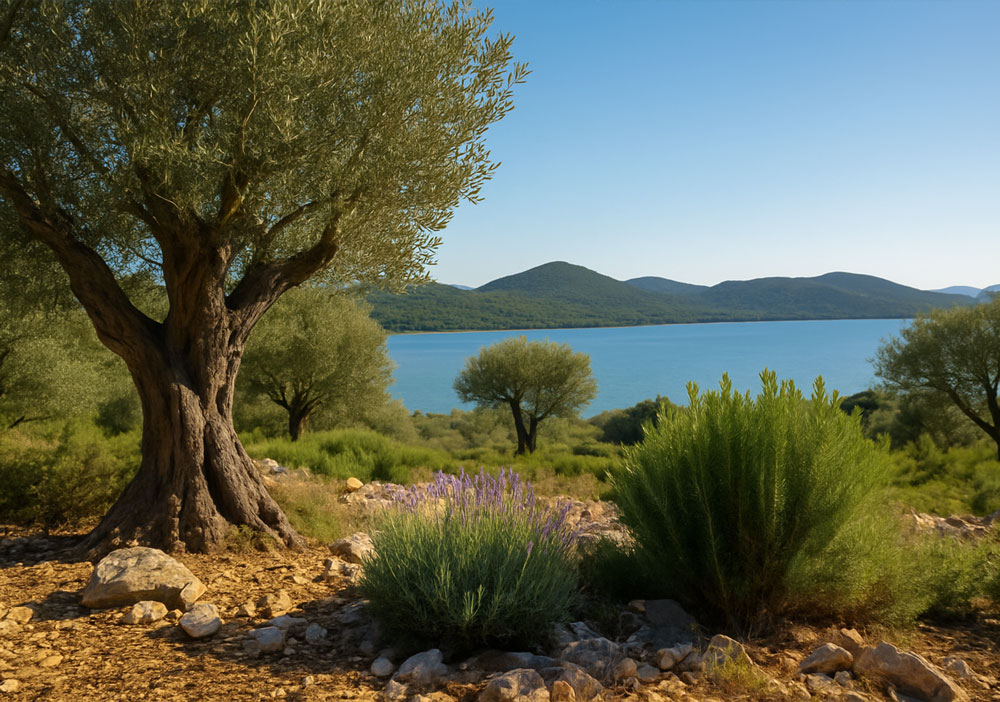
Typical for this area are olive trees, pines, oaks and various aromatic plants such as lavender, rosemary, sage and thyme. They grow not only in gardens, but also in the wild. Especially near the coast and on the hillsides you can smell the penetrating scent of herbs mixed with the sea air.

The native plant species are resistant to drought and adapt well to rocky, sunny terrain. Around Lake Vrana there are also wetland areas, where other species typical of damp environments grow – for example reeds, sedges and water lilies.

🐦 Fauna: From birds to lizards

The Pirovac area is home to many bird species. The best known is the bird reserve at Lake Vrana, where you can watch more than 250 species of birds, including herons, ducks, cormorants and even sea eagles.

In the wild you can also meet lizards, geckos, tortoises, and if you are lucky, you may see a hedgehog or a marten. The sea hides a rich underwater world – besides fish there are sea urchins, crabs, starfish and octopuses, which you can see while snorkelling.

🌳 Protected areas and educational trails

If you long for a more active exploration of nature, set off on one of the educational trails around Lake Vrana or on the island of Murter, where you will find olive trails leading through traditional groves. These areas are often part of protected natural areas and are suitable for hiking lovers as well as families with children.

✨ Conclusion: Nature that completes the holiday atmosphere

The fauna and flora of the Pirovac and Murter area are unassuming, yet fascinating. Thanks to them this part of Dalmatia has its own distinctive character – the scent of herbs, the song of birds and a landscape dotted with olive trees. If you stop and look around during your holiday, you may find the loveliest connection with nature in exactly these details.

Why Is There Grass in the Bay? It May Not Look Like a Paradise Beach, but It Is a Gift to Nature

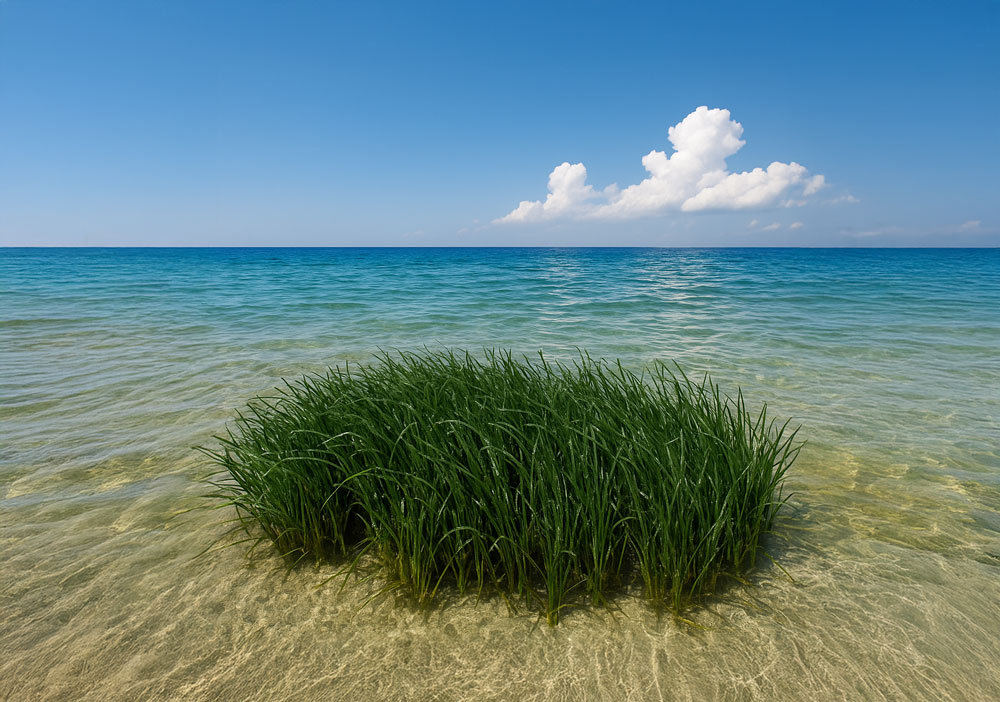
If you walk along the coast and spot seagrass in the water, you may think that sand or rocks would look “prettier”. But do not be fooled by appearances – seagrass is one of the most important elements of the marine ecosystem.

In our bay by the apartments you will find seagrass a little further from the shore – and although it does not look as attractive as clear water over a sandy bottom, its presence is extremely useful and valuable for nature.

What is seagrass actually?

The best-known species is Posidonia oceanica, which is common in the Adriatic Sea and elsewhere in the Mediterranean. It is not an alga, but a real plant with roots, leaves and the ability to flower. It grows on the seabed and forms dense underwater meadows.

5 reasons why seagrass is important to us

  1. It improves water quality
    It filters water, traps impurities and contributes to clarity. In addition, it binds CO₂ and releases oxygen, supporting the balance of the ecosystem.
  2. It protects the coast from erosion
    Seagrass roots stabilise the seabed and protect it from waves, storms and the washing away of sand.
  3. A refuge for marine life
    Many fish, shrimp and marine animals find a safe place here to live and reproduce. These meadows are like an “underwater forest”.
  4. It supports biodiversity
    Seagrass meadows are full of life – from microscopic organisms to larger animals. They are the foundation of a healthy marine food chain.
  5. It helps clean the sea
    The grass can absorb harmful substances from the water and contributes to a healthier and cleaner environment.

Seagrass in Croatia

In Croatia, especially along the Adriatic coast, Posidonia meadows are very common. So if you come across strips of grass while swimming, know that you are in a healthy and clean marine environment. These areas are also often part of protected zones, which further underlines their importance.

Doesn’t sound so bad, does it?

Although seagrass may not look like the ideal place to swim at first glance, it is thanks to it that we have a clean sea, life in the bay and a healthy nature. That is why we see it not as an obstacle, but as an ally of nature and a silent guardian of marine health.

Pirovac Brodet: A Traditional Fish Stew That Tastes of Dalmatia

Croatia is known not only for its wonderful coastline, but also for its rich Mediterranean cuisine. If you are planning a holiday around Pirovac or Murter, you should definitely taste one of the most typical dishes of this region – Pirovac brodet, a hearty fish stew that tastes like the sea itself.

🍲 What is brodet?

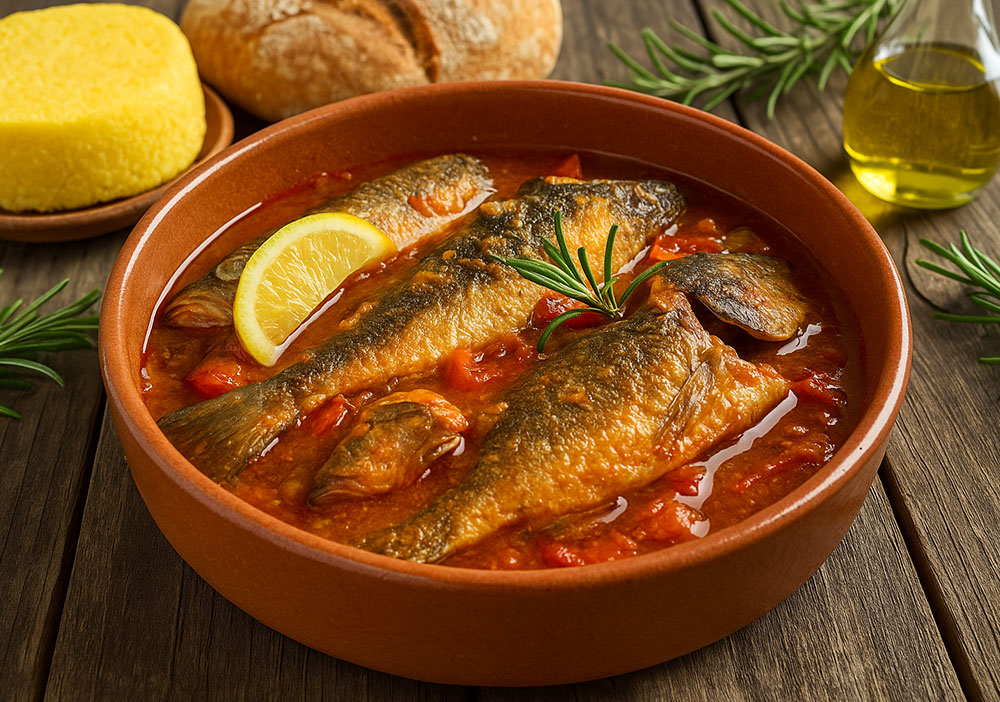
Pirovac brodet is a traditional thick soup or stew made of several kinds of fish, vegetables, white wine, olive oil and aromatic herbs. It is a dish that fishermen in Dalmatia used to prepare right on the boat to make use of the fresh catch.

To this day it is a favourite at celebrations and family gatherings, where it is served with polenta or fresh bread.

🐟 Ingredients for an authentic taste

To make a real brodet you will need:

  • A mix of fresh fish: sea bass, sea bream, conger eel and other local fish
  • Onion, garlic, tomatoes, peppers
  • Tomato paste, white wine, thyme, bay leaf
  • Olive oil, lemon and polenta for serving

All the ingredients are typical of coastal Croatia and create a perfect harmony of flavours.

👩‍🍳 Method

  1. Clean and cut the fish.
  2. Fry the vegetables (onion, garlic, peppers).
  3. Add the tomatoes and tomato paste and cook for a while.
  4. Pour in the wine, add the fish and let it cook.
  5. Season with herbs and simmer for 20–30 minutes.
  6. Serve with polenta or bread, garnished with lemon and a drop of olive oil.

✨ Why try brodet on holiday?

This dish is not just a culinary experience – it is part of local identity. It brings together tradition, family and the Mediterranean way of life. In the restaurants around Pirovac it is often prepared according to family recipes passed down from generation to generation.

Tip: If you are staying in an apartment with a kitchenette, don’t hesitate to try brodet at home too. You can buy fresh fish at the local market, and the other ingredients are readily available.

Donkey Races – A Fun Tradition from Croatia

Donkey races are a very interesting and entertaining tradition held in some areas of Croatia, including some parts of Dalmatia. These races have a long history and are popular at various local festivals and celebrations, especially in smaller towns and villages.

Donkey races in Croatia

History:

Donkey races have their roots in traditional shepherd culture. In the past, donkeys in Croatia and other south-eastern countries were used for work on farms and in the mountains. Since they are strong and resilient animals, it is no surprise that they became part of various local traditions, including these fun races.

How the races go:

Donkey races are usually held in open spaces, such as town squares or village roads. The participants, usually local farmers or residents, try to get their donkeys along the set route as quickly as possible. The races can be part of larger events, such as local festivals or celebrations.

Significance:

Donkey races are not only about speed, but also about traditional values such as cooperation between human and animal. Donkeys are often considered very intelligent and tenacious animals that deserve respect. The races are therefore also an opportunity to show this important connection between people and nature.

Fun for visitors

The races are very popular with tourists and locals alike. They are fun and often humorous events, with various accompanying activities such as traditional food, music and dancing. For children the races are often very interesting, because they can watch the funny performances of the donkeys and their handlers.

Where do donkey races take place?

Donkey races are often held in smaller towns and villages in Dalmatia, as well as in other regions of Croatia. These events are part of a wider cultural tradition and are often linked to local holidays or celebrations. In Pirovac or its surroundings you may come across these races during certain local festivals or holidays, although they are not held every year.

If you are interested in experiencing something truly traditional and unusual, donkey races are one of those great experiences that let you glimpse local culture and traditions.