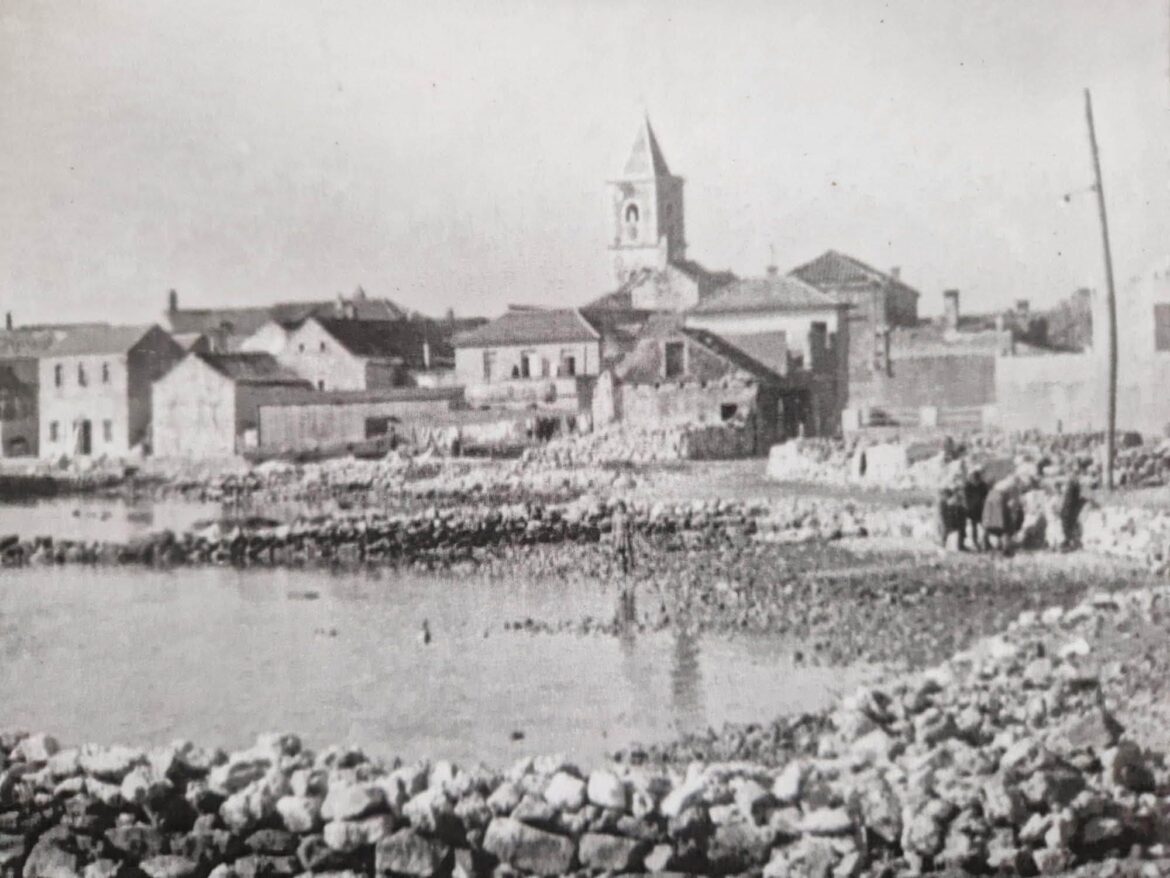
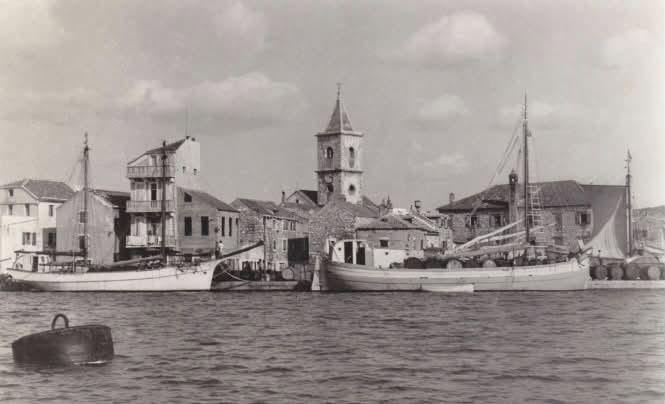
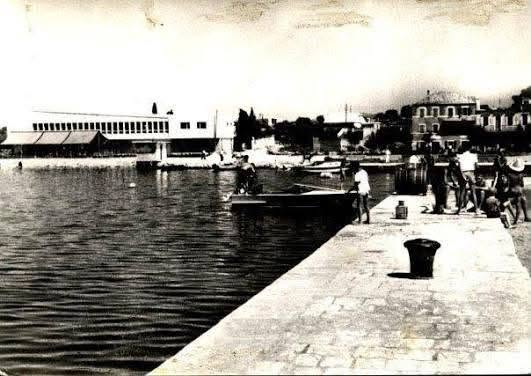
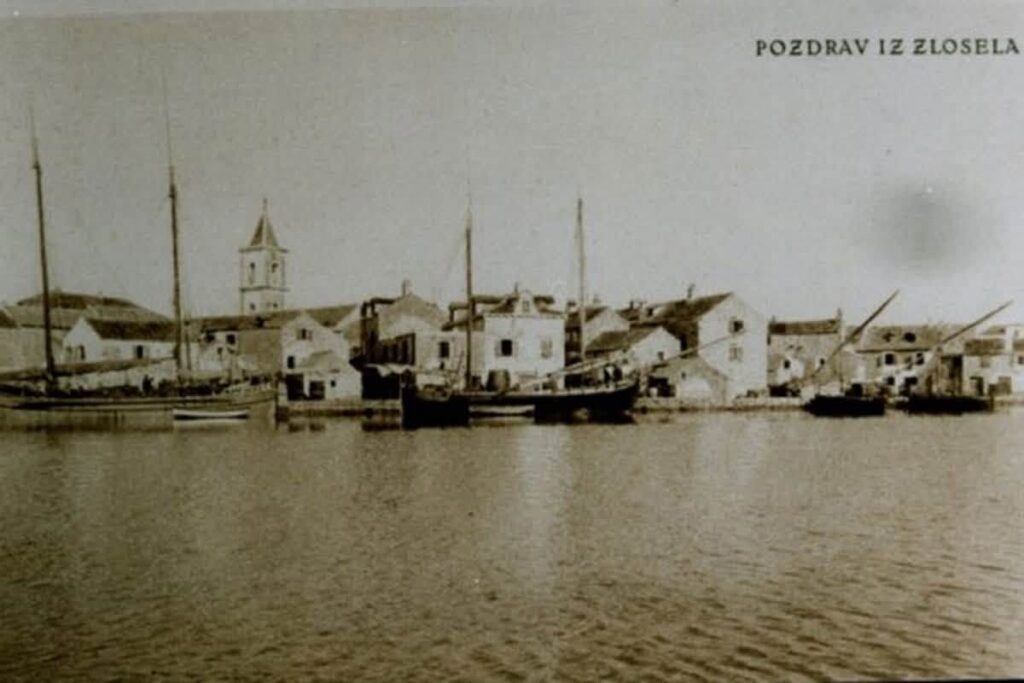
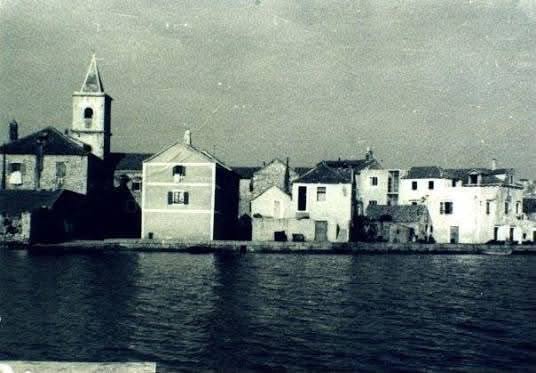
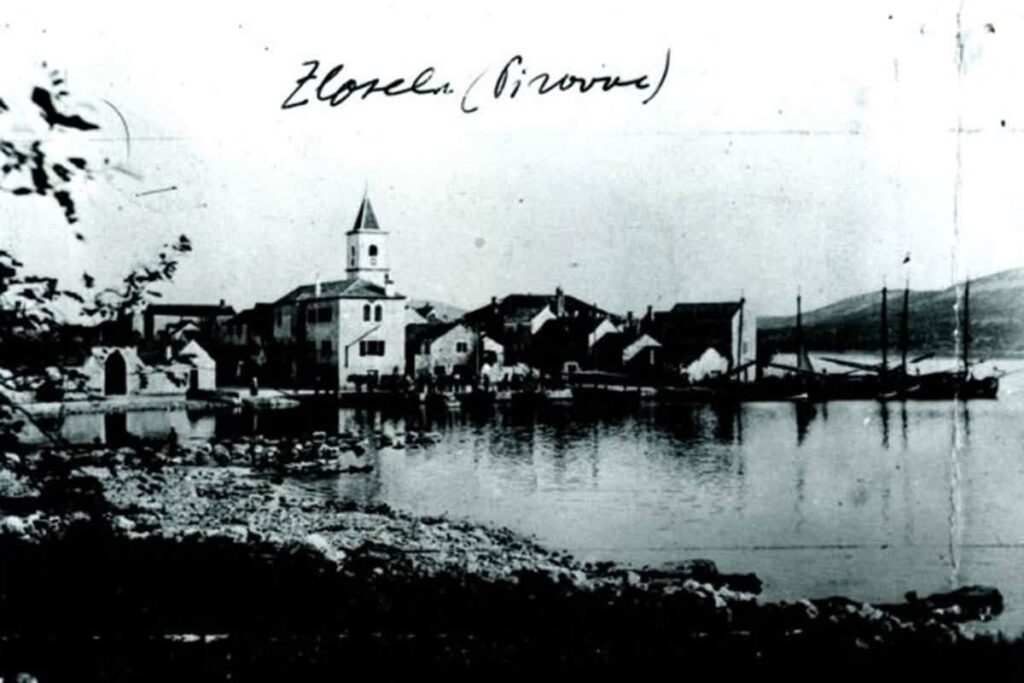
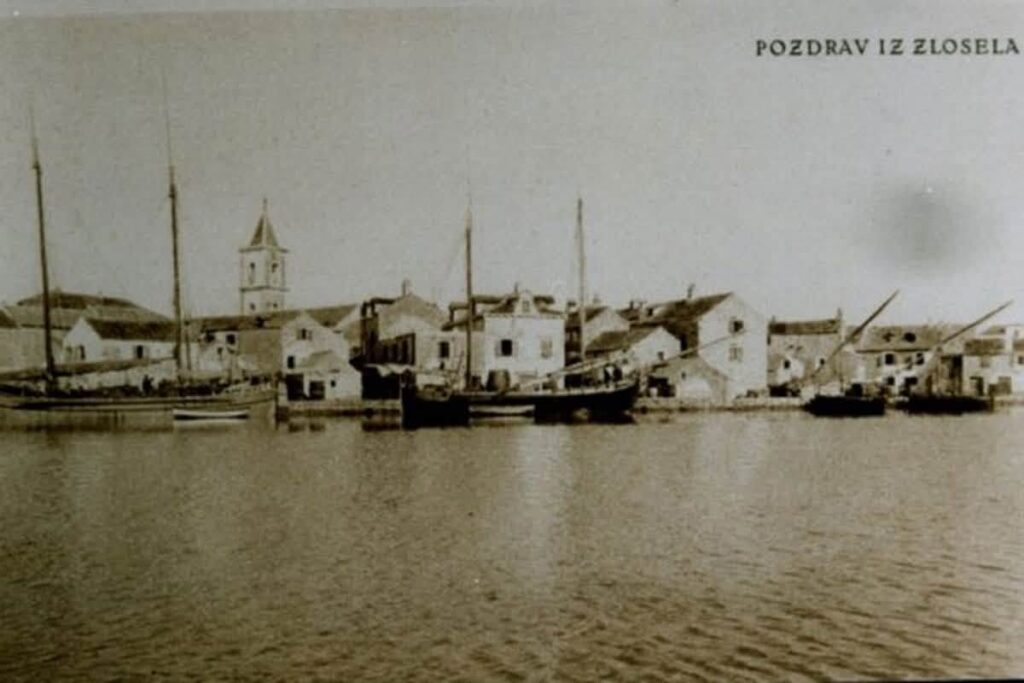
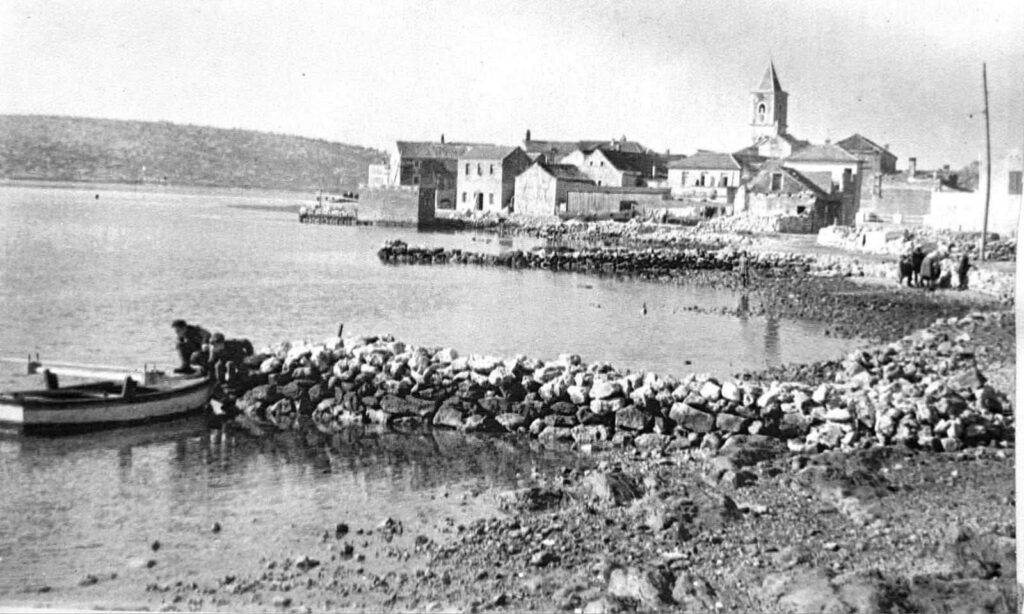
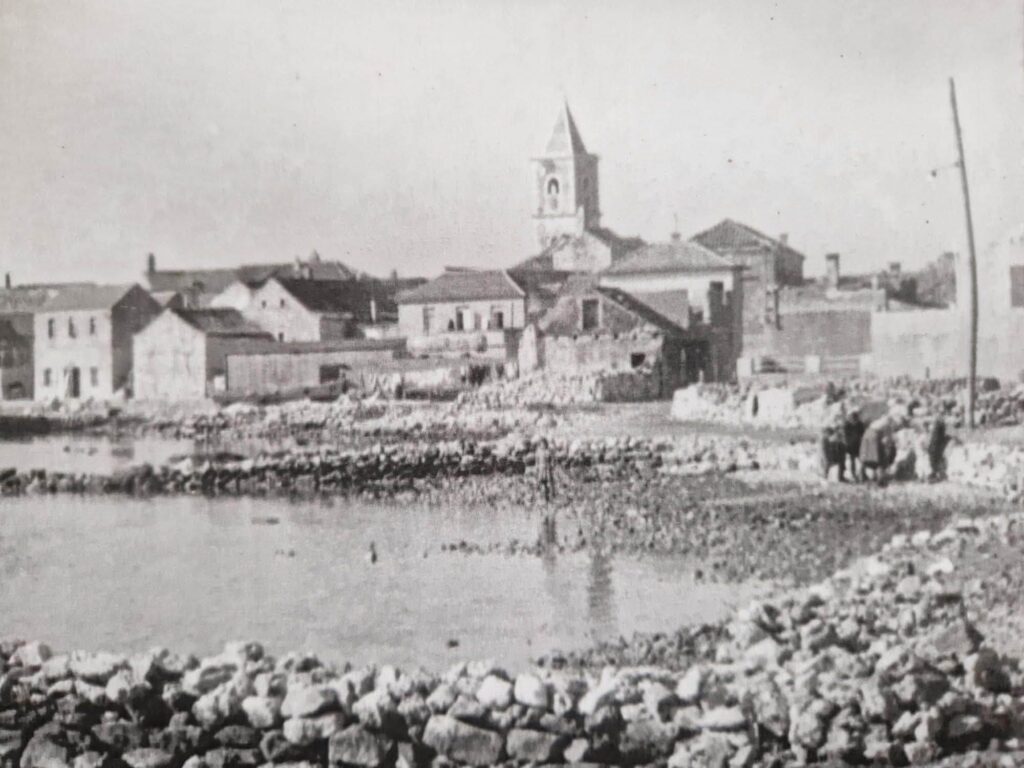
Old photographs of Pirovac reveal a scene that is hard to picture today. The coastline looked completely different, with fishing boats, sailing vessels and small wooden boats moored right beside the houses. Back then, the sea was not just a place for swimming and relaxing — it was a central part of everyday life for the local community.
The sea as a source of livelihood
For many Pirovac families, the sea was above all a place of work. It served as a route for travel, a workspace, and a source of food. Along the shore, fishing nets were mended, boats were made ready, and the day’s catch was unloaded. Small boats covered everyday fishing needs, while larger sailing vessels played a wider role in the village’s maritime life.
A waterfront we wouldn’t recognize today
It’s especially striking to see how different the old coastline was from the one we know now. In some of the historic photographs, the sea reaches almost all the way up to the houses — today’s promenade, landscaped waterfront and paved riva simply didn’t exist yet in their current form. Over the decades, Pirovac has changed considerably, yet its bond with the sea has stayed just as strong.
Pirovac and the sea — a connection that hasn’t changed
These old photographs are more than a nostalgic glance backward. They let us compare Pirovac then and now, and see just how much the village has evolved over time. One thing, however, has never changed: Pirovac and the sea remain inseparable.
If you’re planning a holiday in Pirovac, it’s worth remembering this chapter of its history next time you stroll along the modern riva — and perhaps finding your own view of the sea, for example at Vila Bonaca apartments.
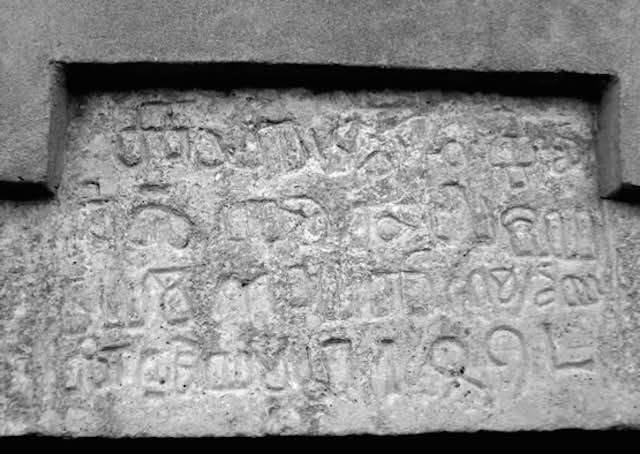
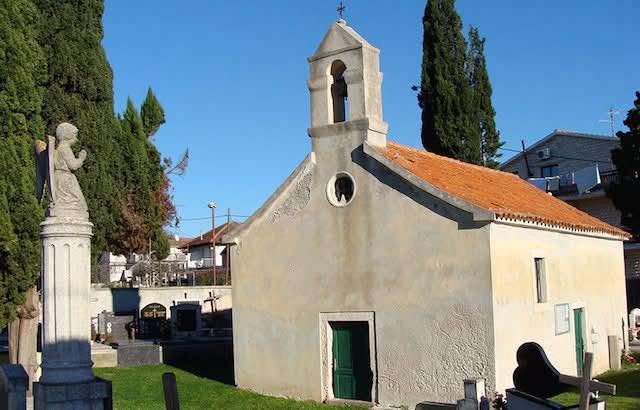
Pirovac is not only a popular seaside destination known for its beaches and authentic Dalmatian atmosphere. This charming Croatian town also hides fascinating traces of its long history. One of them is a valuable Glagolitic inscription dating back to 1495, preserved on the Church of St George at the cemetery in Pirovac.
An inscription more than 500 years old
The Church of St George (Crkva sv. Jurja) at the cemetery in Pirovac preserves a valuable Glagolitic inscription dating from 1495.
It is one of the fascinating traces of Pirovac’s historical and cultural heritage and a reminder of the long tradition of the Glagolitic script along the Croatian coast.
According to the published transcription, the inscription records the completion of work on the church and mentions master craftsman Mihovil Jaković:
“Let Gospodnjih 1495. to delo svrši meštar Mihovil Jaković.”
The inscription essentially records that in the year of the Lord 1495, the work was completed by master Mihovil Jaković.
Although it is only a short inscription carved into stone, it provides a remarkable connection to the people who lived and worked in Pirovac more than five centuries ago.
Hidden for centuries
The story of the inscription’s rediscovery is equally interesting.
Over time, the Glagolitic inscription became hidden beneath layers of lime and remained out of sight for many years.
It was finally rediscovered in 1972, revealing an important piece of the area’s cultural heritage.
Today, this small inscription serves as a reminder that the history of Pirovac reaches far beyond its modern identity as a popular Croatian holiday destination.
What is the Glagolitic script?
Glagolitic is one of the oldest known Slavic alphabets and holds a particularly important place in Croatian cultural history.
The script was used in Croatia for centuries, especially in religious texts, inscriptions and other written documents. Today, preserved Glagolitic manuscripts and stone inscriptions are considered an important part of the country’s cultural heritage.
Pirovac is one of the places where traces of this remarkable tradition can still be found.
A long Glagolitic tradition in Pirovac
The inscription on the Church of St George is not the only evidence connecting Pirovac with the Glagolitic tradition.
Glagolitic wills from the former settlement of Zlosela, the historical name of today’s Pirovac, have also been preserved. These documents date from the late 17th and 18th centuries.
Their existence shows that the Glagolitic script continued to be used in this area for centuries after the inscription on the Church of St George was created.
Together, these historical records provide a fascinating glimpse into the cultural and written traditions of Pirovac.
Discover another side of Pirovac
Most visitors come to Pirovac for its sea, beaches, restaurants and relaxed Dalmatian atmosphere. However, exploring its historical sites reveals another side of this charming coastal town.
The Church of St George and its more than 500-year-old Glagolitic inscription are perfect examples of how history can be hidden in places that are easy to overlook.
More than five centuries after it was carved, this small inscription in stone continues to preserve a piece of Pirovac’s story.
So, while enjoying your holiday in Pirovac, take some time to discover its historical heritage as well. Beyond the beaches and the Adriatic Sea, you may find that some of Pirovac’s smallest details tell its most interesting stories.
If you’re planning a holiday in the Croatian town of Pirovac, one of the first questions you’ll probably ask is which route is the best and how long the journey takes. The good news is that Pirovac is one of the easiest seaside destinations to reach on the Adriatic coast, with a comfortable drive almost entirely on modern motorways.
In this guide, you’ll find everything you need to know about the route, motorway tolls and useful travel tips.
Where Is Pirovac?
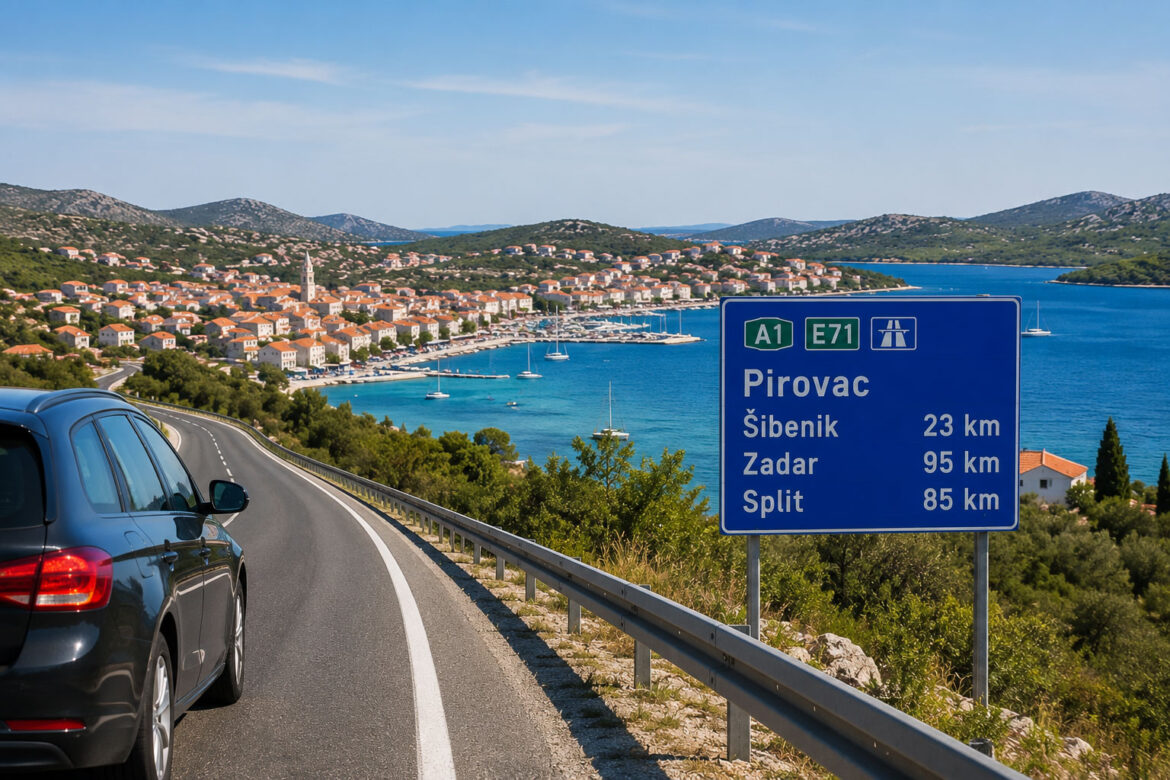
Pirovac is located in Northern Dalmatia, approximately halfway between Zadar and Šibenik. It is only a few kilometres from Croatia’s A1 motorway, making it one of the most accessible seaside resorts in the country.
Once you leave the motorway, it’s only about a 10-minute drive to the centre of Pirovac.
What Is the Most Common Route from Slovakia?
Most travellers from Slovakia take the following route:
Bratislava → Rajka → Hungary → Letenye → Croatia → Zagreb → A1 Motorway → Pirovac Exit
If you’re travelling from central or eastern Slovakia, your route naturally joins the Hungarian motorway network heading towards the Croatian border.
One of the biggest advantages of this route is that almost the entire journey is on high-quality motorways.
How Long Does the Journey Take?
Approximate driving times:
Bratislava: around 7–8 hours
Trnava: around 7.5 hours
Nitra: around 8 hours
Žilina: around 8–9 hours
Banská Bystrica: around 8.5 hours
Košice: around 11–12 hours
Travel time depends on traffic conditions, rest stops and your departure time. During peak summer Saturdays, expect longer travel times due to increased tourist traffic.
Which Motorway Tolls Will You Need?
Travelling from Slovakia to Pirovac involves three different motorway payment systems.
Slovakia
An electronic motorway vignette is required on Slovak motorways.
Hungary
Hungary also uses an electronic motorway vignette, which is best purchased before your journey.
Croatia
Croatia does not use motorway vignettes.
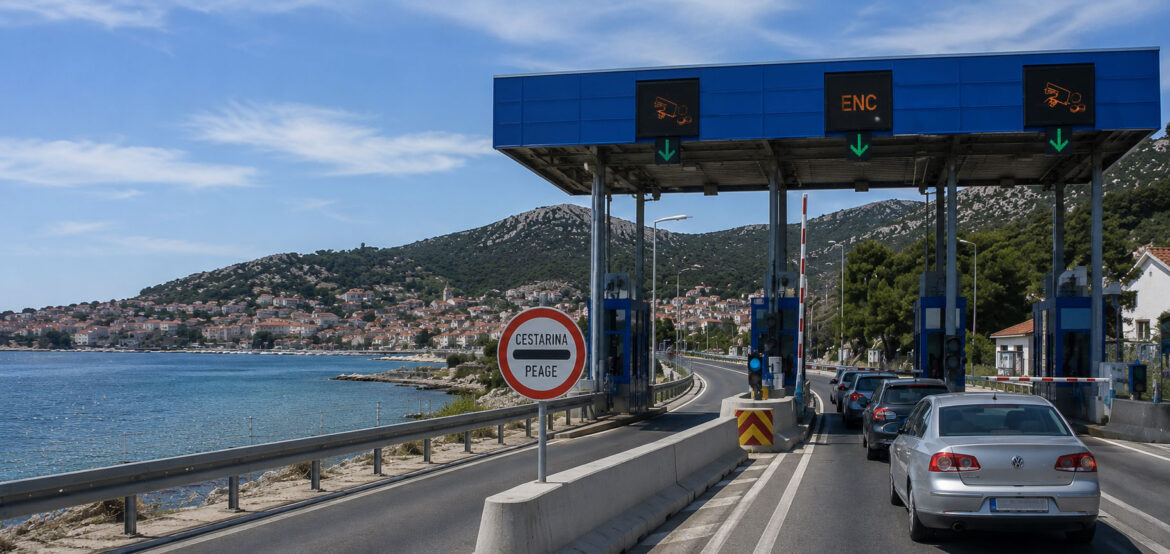
Instead, Croatian motorways operate with a toll system. When entering the motorway, you take a ticket and pay when leaving based on the distance travelled. Payment can be made by cash or credit card.
Which Currency Is Used?
Since 2023, Croatia’s official currency has been the euro (€).
This means there’s no need to exchange money before your trip. Most petrol stations, toll booths, restaurants and shops accept major credit and debit cards.
When Is the Best Time to Travel?
If you’re travelling during the summer season, it’s recommended to leave:
in the evening,
early in the morning,
or avoid Saturdays, which are typically the busiest days on Croatian motorways.
The longest traffic queues usually occur around Zagreb and on the A1 motorway towards the Adriatic coast.
Where Can You Take a Break?
The Croatian A1 motorway offers numerous modern service areas.
Most include:
Petrol station
Toilets
Restaurant or café
Children’s playground
Convenience store
It’s recommended to take a break every two to three hours while driving.
How Do Croatian Toll Booths Work?
When entering the motorway, you’ll receive a paper ticket.
When exiting, simply insert the ticket into the machine or hand it to the toll operator. The system calculates the toll based on the distance travelled.
You can pay using:
Credit or debit card
Cash (euros)
ENC electronic toll device
ENC is particularly popular with frequent visitors because it offers faster passage through toll stations and discounted toll rates.
What Should You Check Before Leaving?
Before your trip, make sure you have:
Valid travel documents
Motorway vignettes for Slovakia and Hungary
Proper tyre condition
Working air conditioning
Mandatory vehicle equipment
Valid vehicle insurance
If you’re travelling with children, remember to bring plenty of water, snacks and plan regular breaks along the way.
Why Do So Many Tourists Choose Pirovac?
One of Pirovac’s greatest advantages is its excellent accessibility.
After leaving the motorway, you’ll reach the town centre within just a few minutes, without having to drive long distances along narrow coastal roads.
That’s one of the reasons why Pirovac is especially popular with families and travellers who prefer a comfortable road trip.
Stay in Our Apartment and Enjoy a Stress-Free Holiday
Planning your Croatian road trip? Stay in our apartment and enjoy easy access, beautiful beaches, crystal-clear sea and the relaxed atmosphere of Pirovac. Thanks to its convenient location near the A1 motorway, your holiday begins almost as soon as you arrive.
If you’re travelling to Croatia by car, you’re probably wondering how motorway tolls work. Many drivers still ask whether they need a motorway vignette or how tolls are paid.
The good news is that the system is very straightforward. Croatia does not use motorway vignettes. Instead, you only pay for the section of motorway you actually use.
Do I Need a Motorway Vignette in Croatia?
No.
Unlike Slovakia, the Czech Republic, Austria or Hungary, Croatia does not require a motorway vignette. Instead, the country’s motorways operate on a distance-based toll system, meaning you only pay for the part of the motorway you drive on.
How Does the Croatian Toll System Work?
Most Croatian motorways operate using a closed toll system.
When entering the motorway, you take a ticket at the toll booth. Keep this ticket with you throughout your journey. When leaving the motorway, you either hand the ticket to the toll booth operator or insert it into the machine, which calculates the toll based on the distance travelled.
The system works much like a parking garage—you only pay for what you use.
How Can I Pay the Toll?
At most toll stations you can pay by:
Credit or debit card (Visa, Mastercard, Maestro and others)
Cash (euros)
ENC electronic toll system
Paying by card is the fastest and most popular option for international visitors.
What Is ENC?
ENC (Electronic Toll Collection) is a small electronic device placed on your vehicle’s windscreen.
When driving through designated ENC lanes, the toll is charged automatically, allowing drivers to pass without stopping at the payment booth.
Besides saving time, ENC also offers discounted toll rates, making it an excellent option for travellers who visit Croatia regularly.
Do I Pay on Every Road?
No.
Tolls only apply to motorways and a few specific toll facilities. Most national and regional roads are completely free to use.
If you choose to avoid the motorway network, you won’t pay any tolls.
What Determines the Toll Price?
The toll depends on:
the distance travelled,
the vehicle category,
the motorway section used.
Passenger cars fall into the standard category, while vans, buses and heavy goods vehicles pay higher tolls.
What Happens If You Lose Your Ticket?
If you lose your motorway ticket during your journey, the motorway operator may charge you the maximum possible tollfor that motorway section.
For this reason, it’s important to keep your ticket in a safe place until you leave the motorway.
Are Any Changes Planned?
Yes.
Croatia is currently preparing a new contactless toll collection system called Crolibertas.
Once introduced, drivers will no longer need to stop at toll booths. The system will use licence plate recognition cameras together with electronic devices similar to today’s ENC units.
However, throughout the 2026 tourist season, the current toll booth system remains in operation.
The new Crolibertas system is currently expected to launch in March 2027.
Tips for Driving in Croatia
If you’re travelling during the busy summer season:
Have your payment card ready before reaching the toll booth.
Keep your motorway ticket safe throughout your journey.
Expect heavier traffic on Saturdays during peak season.
If you travel to Croatia several times a year, consider purchasing an ENC device.
Following these simple tips will help you enjoy a smooth and stress-free journey on Croatian motorways.
Stay in Our Apartment and Enjoy a Relaxing Holiday
Planning a road trip to Croatia? Stay in our apartment and enjoy everything the beautiful Pirovac and Murter region has to offer. With easy motorway access, crystal-clear beaches, charming coastal towns and unforgettable sunsets, your holiday begins the moment you arrive.
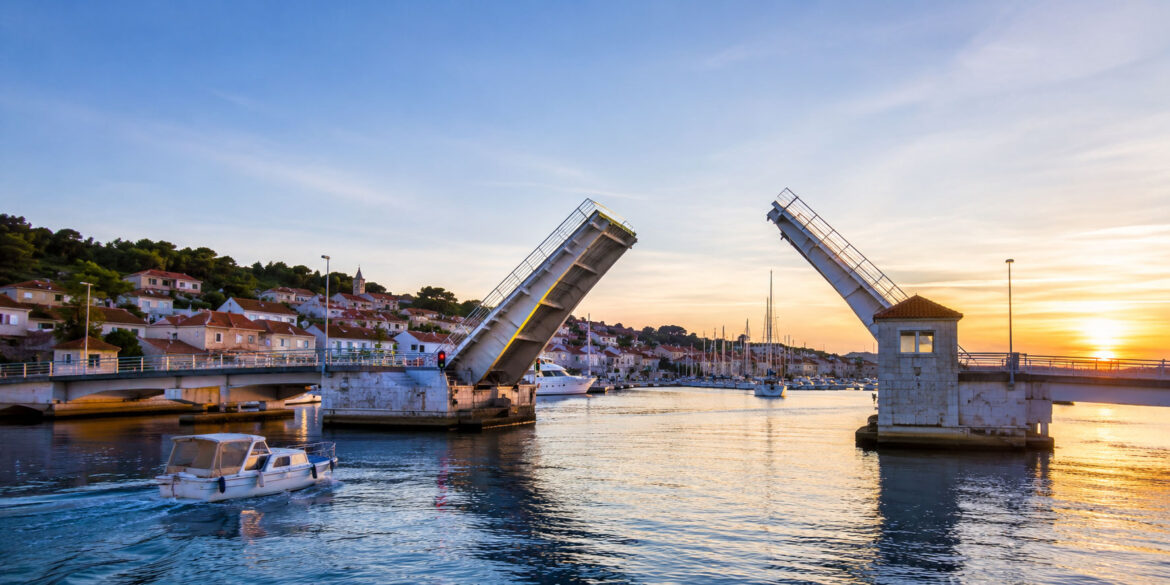
If you’re planning a holiday on Murter Island, you may be surprised to learn that you don’t need a ferry to get there. Murter is one of the few Croatian islands that can be easily reached by car via the unique drawbridge in the town of Tisno. This bridge is one of the region’s most famous landmarks and attracts thousands of visitors every year.
The Only Road Connection Between Murter Island and the Mainland
The Tisno Drawbridge connects Murter Island with the Croatian mainland and is the island’s only road connection. It is located on the D121 road and crosses a narrow sea channel approximately 38 metres wide.
The name Tisno comes from the Croatian word tijesno, meaning “narrow”, perfectly describing the location where the bridge was built.
Thanks to the bridge, travelling to Murter Island is quick and convenient. During the summer season, thousands of cars, cyclists and pedestrians cross it every day.
A History Dating Back to the 18th Century
The first bridge at this location was built in the early 18th century after the Ottoman invasions had ended, creating the need to connect the island with the mainland.
The current mechanical drawbridge was constructed in 1968 and has undergone several renovations over the years.
Interestingly, the original bridge opened manually by swinging sideways. According to local chronicles, horse-drawn carts and even donkeys once crossed the bridge, although the animals were often reluctant to walk over the gaps between the wooden planks.
Why Does the Bridge Open Every Day?
Although Murter Island is accessible by road all year round, the bridge opens regularly to allow taller boats and yachts to pass safely into the Murter Sea.
When the bridge is raised, both road traffic and pedestrians are temporarily stopped for a few minutes while vessels pass through the narrow channel.
For visitors, this is one of the most enjoyable moments to watch sailing boats, fishing vessels and luxury yachts slowly glide beneath the bridge. Many tourists photograph or film this daily event, as it has become one of the most recognisable scenes in Tisno.
Tisno Drawbridge Opening Times
From 1 June to 15 September
Every day: 09:00 – 09:20
Every day: 18:00 – 18:20
From 16 September to 31 May
Monday and Friday
09:00 – 09:20
During bridge openings, both road traffic and pedestrians must wait until the bridge is lowered again. If you’re travelling by car, it’s worth considering these times when planning your journey.
A Fun Fact for Boating Enthusiasts
When closed, the bridge provides a clearance of approximately 1.8 metres, allowing only smaller boats to pass underneath without opening.
Larger vessels must wait for the scheduled bridge opening.
Captains should also be aware of the relatively strong current in the narrow channel, which can reach around 4 knots and changes direction depending on tides, wind and sea conditions.
Where the Mainland Meets the Island
One of Tisno’s most fascinating features is its unique location. The historic town is spread across both the Croatian mainland and Murter Island, with the drawbridge connecting the two halves.
Within just a few minutes, visitors can walk from the mainland to the island and back again.
For this reason, the bridge has become one of the most photographed landmarks in the area and has symbolised Tisno for decades.
A Tradition That Lives On
The bridge is much more than a piece of infrastructure.
Every summer, Tisno hosts the traditional Bridge Games (Mostne Igre), a community celebration dedicated to this iconic landmark. The event usually includes sports competitions, cultural performances and evening gatherings for both locals and visitors.
Visitor Tip
If possible, plan your walk through Tisno about 15 minutes before the bridge opens.
You’ll be able to watch traffic come to a stop as the bridge slowly rises, allowing sailing boats and yachts to pass between the mainland and Murter Island.
Although the opening only lasts a few minutes, it is one of the most memorable experiences and a true symbol of a holiday on Murter Island.
Stay in Our Apartment and Experience Murter Island
Planning your holiday in Croatia? Stay in our apartment and experience one of Murter Island’s most iconic attractions for yourself. From the famous Tisno Drawbridge to crystal-clear beaches, charming coastal towns and unforgettable sunsets, you’ll discover why so many visitors return year after year.
Sources
Murter Tourist Board – Bridge lifting timetable
Municipality of Tisno – Bridge opening schedule 2026
Tisno Tourist Board – Tisno Bridge
Tisno Tourist Board – Geographical and Historical Position
Nowhere else will you see something like this. The Cathedral of St. James in Šibenik is a blend of architectural genius and a gallery of 71 stone-carved heads.
Krešimir’s city, as Šibenik is also called, was the first city in the world with alternating current and the first city in Croatia to have public lighting – thanks to the hydroelectric power plant built on the Krka River in 1895. Šibenik is also one of the oldest towns on the Croatian coast, the birthplace of the great Dražen Petrović, a city of sports, fortresses, and culture. For centuries, however, it has also been home to the Cathedral of St. James, admired not only for its harmony and grandeur but also for its unique construction technique unmatched in all of Europe. This stone masterpiece is a monument to human creativity and perseverance, a symbol of Šibenik, and a place worth experiencing at least once in a lifetime, writes Putni kofer.
UNESCO World Heritage
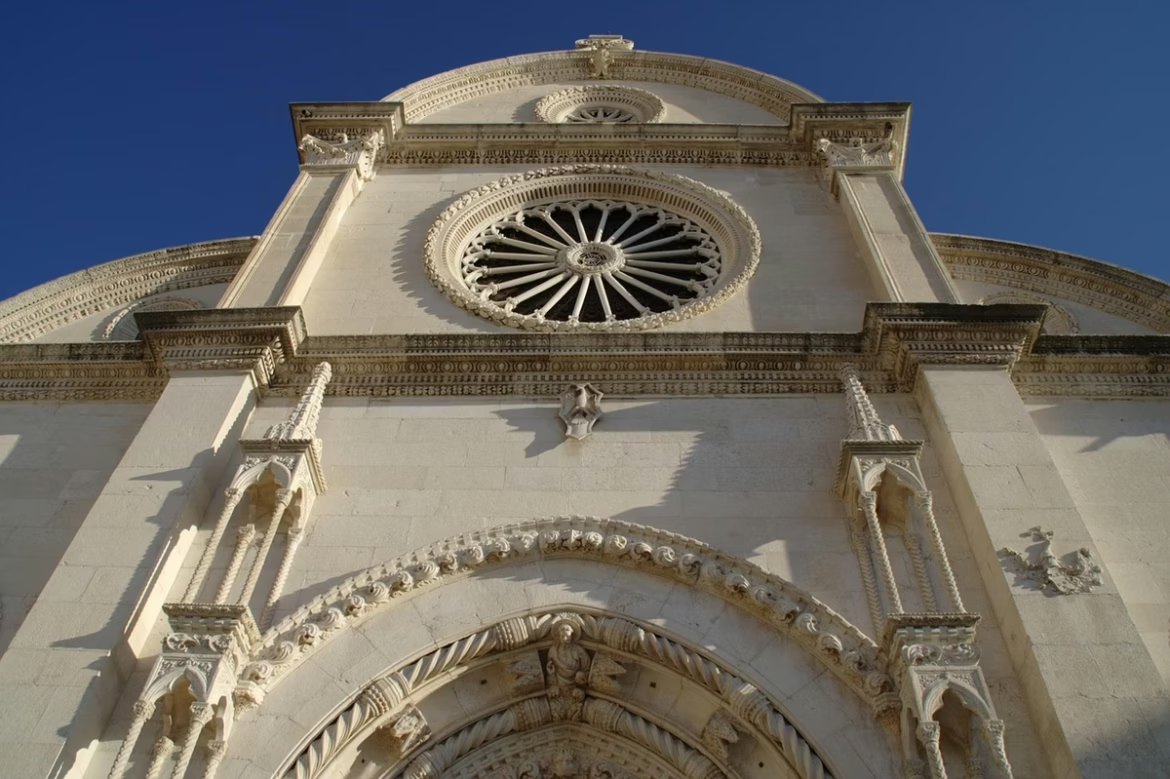
The Cathedral of St. James stands out among European sacral buildings because it was built entirely of stone – without the use of binding materials such as mortar, and without wooden structures. Instead, master builder Juraj Dalmatinac designed an innovative system in which carefully crafted stone blocks were laid and joined together like a giant puzzle. This method, unique in European architectural tradition, places the Šibenik cathedral among the true wonders of world architecture.
Due to its exceptional value, the cathedral was inscribed on the UNESCO World Heritage List in 2000. In UNESCO’s explanation, the uniqueness of its construction is particularly emphasized, as well as the fact that the entire building – including the dome and vaults – was made exclusively of stone. According to UNESCO, this is a unique example in Europe and an important testament to the exchange of cultural and architectural influences between northern Italy, Dalmatia, and Tuscany in the 15th and 16th centuries.
Two Masters – Juraj Dalmatinac and Nikola Firentinac
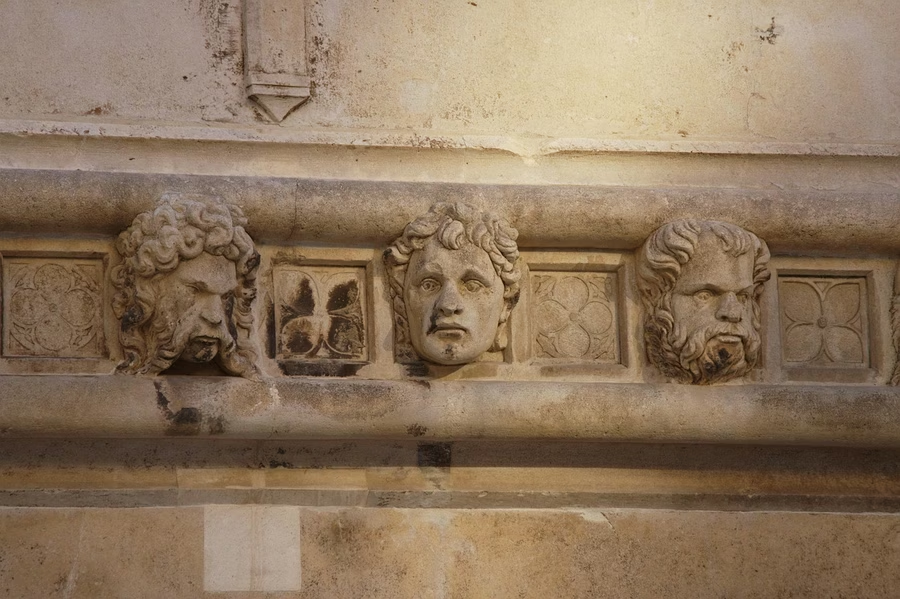
Construction of the cathedral began in 1431 and lasted for more than a century. Its first chief builder was Juraj Dalmatinac, one of the most important architects and sculptors of the late Gothic and early Renaissance in Dalmatia. His work was marked by innovation – from the construction technique without binding material to sculptural details such as the famous gallery of 71 human heads on the exterior wall of the apse. After his death, the work was continued by Nikola Firentinac, who added Renaissance elements and completed the project into a unique whole.
71 Carved Heads as a Symbol
On the outer walls and facades of the cathedral lies a series of 71 carved human heads, which for centuries have aroused admiration and curiosity. Their origin and meaning have never been fully clarified, but historians assume that Juraj Dalmatinac immortalized real people he encountered during his stay in Šibenik.
Pixabay
The faces are diverse – from serious and dignified to slightly grotesque and caricature-like – suggesting that the author wanted to depict the variety of society at that time, from respected citizens and merchants to ordinary townspeople, and perhaps even his own acquaintances.
In addition to being an unrepeatable architectural masterpiece, the Cathedral of St. James also holds a strong symbolic role. Its dome, dominating the city’s panorama, served for centuries as a landmark for sailors and as a symbol of Šibenik’s strength and identity. Today, it is not only an unmissable site for visitors but also a vibrant gathering place for the local community.
SEASIDE APARTMENTS: HOW TO CHOOSE THE RIGHT ONE FOR YOU?
Seaside apartments attract tourists all year round, as the best accommodation units are often booked very quickly. But you may be wondering – which apartment is the most suitable for you? Every traveler has different needs and expectations, so choosing accommodation that matches your preferences is essential for an unforgettable holiday. Below, we bring you tips on how to find the perfect apartment tailored to your needs.
Apartments in Croatia
Seaside apartments in Croatia often put tourists before a difficult choice – picking the right one is not easy. The reason is clear: Croatia offers countless natural beauties, cultural landmarks, and historical sites, making it hard to decide near which of them you would like to spend your holiday. To find the ideal apartment, it is important to set your priorities. Do you want to enjoy the atmosphere of a historic old town, or would you rather stay just a two-minute walk from a beautiful beach?
Besides location, you should also consider other criteria related to the apartment itself. Amenities such as Wi-Fi, air conditioning, free parking, or a peaceful environment can determine whether it is the perfect choice for you. If you are not traveling by car, location becomes even more important – make sure the apartment is accessible by public transport and that you can easily reach all the places you wish to visit.
Source: Pexels/Jason Boyd
APARTMENT LOCATION
The PrivatniSmještaj.hr portal makes it easy to search for apartments by location – you can very quickly and simply choose accommodation based on where it is situated. On the homepage, just enter the name of the destination you want to travel to, add your check-in and check-out dates, and specify the number of guests for the booking. By clicking on the Search button, you will see all available apartments in the chosen destination and period.
If location is your main criterion when choosing the ideal apartment, you will find a map on the right side of the page. Seaside apartments can also be searched by selecting the option Search while moving the map. This way, you can view all available apartments in Croatia for your selected dates. You might even discover a new destination that wasn’t originally part of your plans.
PRICE OF SEASIDE APARTMENTS
Seaside apartments advertised on PrivatniSmještaj.hr offer competitive prices, as advertising is completely free for the owners. Set a budget for your holiday and consider how much of it you need to allocate to transportation and food. The remaining amount can then be used for accommodation.
It is recommended to start looking for apartments at least a few months before the start of the season to secure the best balance between the quality of accommodation and the price per night.
Source: Pexels/Ben Mack
WHAT SHOULD YOU NOT FORGET?
Most tourists first look at the photos of an apartment and its price, and only then check the location and amenities it offers. However, it is equally important not to forget to read the cancellation policy and booking conditions. Some accommodations charge extra for air conditioning or parking, so it’s good to know this information in advance to avoid unpleasant surprises. It’s also wise to choose an apartment with cancellation terms that suit you, as unexpected situations can always happen. If something in the listing is unclear, don’t hesitate to contact the hosts for further explanations or additional information.
Searching for a seaside apartment can sometimes be quite a challenge. It’s often difficult to find a balance between your wishes, budget, location, and needs. Thanks to location-based searches and filters – such as price per night, number of beds, number of bedrooms or bathrooms, type of accommodation, and many more – it is much easier to find the ideal seaside apartment on the PrivatniSmještaj.hr portal.
A holiday by the sea is for many families synonymous with sunshine, beaches, relaxation, and unforgettable experiences. To make sure everything goes smoothly and without unnecessary stress, one of the most important steps in planning is choosing the right accommodation.
Today, the range of options is wide – from apartments and hotels to campsites or mobile homes. Each has its specific advantages, and the right choice depends on your family’s needs and priorities.
What to Consider When Choosing Accommodation?
Location:
Proximity to the beach and easy access to the sea.
Distance from the town center, shops, and restaurants.
Facilities:
Kitchen, air conditioning, parking, internet.
Swimming pool, terrace with a sea view, or children’s playground.
On-site restaurants, bars, or entertainment programs.
Booking Conditions:
Cancellation policy and booking flexibility.
Possibility of bringing pets.
Guest Reviews:
Verified guest experiences often reveal more than a simple description.
The Most Popular Types of Accommodation by the Sea
Apartments The most common choice for families – offering privacy, flexibility, and affordability. Especially popular are apartments with pools, sea views, or mooring spots for boats.
Traditional and Robinson Houses Perfect for those seeking authentic atmosphere and tranquility away from the crowds – fishermen’s houses or secluded stone cottages.
Mobile Homes A compromise between the comfort of an apartment and closeness to nature. Modern, practical, and often located in campsites or directly by the beach.
Hotels For travelers who want everything taken care of – restaurants, wellness, cleaning services, or children’s entertainment programs. Hotels often offer special family packages.
Campsites Ideal for active holidaymakers. A mix of nature, freedom, and adventure with the convenience of modern seaside campsites.
Frequently Asked Questions About Accommodation
When to book? The best prices and widest choice are available when booking several months in advance.
Are apartments suitable for families with children? Most are, often providing baby cots or high chairs.
What extra costs to expect? Tourist tax or pet fees may apply.
Are pets allowed? Many places are pet-friendly, but it’s best to confirm in advance.
Conclusion
Whether you’re looking for an apartment with a pool, a traditional cottage for an authentic stay, or a hotel with services for the whole family, the right accommodation is key to a successful holiday.
Tip: Book early and choose according to your priorities – whether it’s proximity to the beach, a quiet environment, or rich services. That way, you’ll secure an unforgettable holiday experience without unnecessary worries.
Planning a summer holiday by the sea is exciting, but it can also be challenging – especially when you’re looking for accommodation that is comfortable, close to the beach, and still affordable. Many travelers ask themselves: How can I find affordable accommodation by the sea without giving up location, comfort, or atmosphere?
The good news is that there are several proven tips and tricks that will help you find the perfect seaside apartment at a price that won’t strain your budget.
Why is it worth searching smart?
Finding affordable accommodation is no longer just a matter of luck. What really matters is being informed, flexible, and choosing the right timing. Whether you’re drawn to authentic apartments in a small coastal village or holiday rentals near popular tourist hotspots, it’s important to know when and how to search.
The benefits of budget-friendly seaside accommodation
Staying by the sea doesn’t have to be luxury-priced to enjoy sunny days and the refreshing sea breeze. The right apartment will allow you to relax without financial stress. If you want to save money and still enjoy privacy, comfort, and even a touch of luxury, all you need to do is follow the right tips.
What to focus on when choosing?
last-minute offers and discounts
direct contact with local hosts
less-known but beautiful locations
bookings outside the peak season
Each of these tips can be the key to a successful booking. Because affordable accommodation by the sea is not an impossible mission – if you know where and how to look.
Source: Shutterstock
How to Find Affordable Accommodation by the Sea?
When we think about holidays, the first association is often the same – sunshine, beaches, and relaxation. The scent of salty sea air, sun loungers under the shade of pine trees, and evening walks along the promenade are what we look forward to for months in advance. But to make the summer truly enjoyable and stress-free, it’s important to know how to find affordable seaside accommodation – one that suits our needs, lifestyle, and budget.
An ideal holiday doesn’t necessarily mean luxury hotels and high expenses. More often, it comes down to smart decisions, the right timing, and a bit of research. Nowadays, it’s no longer enough just to browse adverts – if we want to secure budget-friendly seaside accommodation, we need to be strategic, informed, and ready for small compromises.
Since prices keep rising during peak season, it’s essential to have a plan that helps save money while still enjoying what matters most: proximity to the beach, a peaceful environment, basic comfort, and the feeling of a home away from home.
Today, seaside accommodation comes in many forms – from simple rooms and authentic seaside apartments to glamping cabins and private villas. The question is: how do we find what suits us best without going over budget? The key is knowing how to spot the right opportunities, follow reliable sources, and book at the right time.
Here are seven useful tips to find the best-value seaside apartments, whether you’re planning a weekend getaway, a family holiday, or a longer summer stay.
1. Plan Ahead
One of the most effective ways to find affordable seaside accommodation is to start your search several months before your trip. Early planning often gives you access to a wider selection of apartments, including those offering discounts for early bookings. Looking for accommodation well in advance means more options at better prices and avoiding last-minute stress. The sooner you book, the higher the chance of securing a seaside apartment close to the beach on the dates that suit you best.
2. Choose Less Touristy Destinations
If you want to find affordable seaside accommodation without the crowds and inflated prices, the answer often lies in choosing less popular locations. Instead of famous resorts, consider smaller coastal towns where accommodation is generally more affordable. These seaside apartments often provide an authentic experience, peace, and local charm, while still being budget-friendly. Affordable stays aren’t limited to large booking platforms – you can often find hidden gems along the coast that tourists haven’t yet discovered.
3. Contact Owners Directly
One of the most practical tips to save money is direct communication with apartment owners. By reaching out to locals directly, you can often agree on a lower price since there are no commission fees from booking platforms. This approach not only saves money but also often offers more flexible conditions – such as early check-in, late check-out, or additional benefits. If you know where to look and how to talk to hosts, direct contact can be the key to affordable seaside accommodation tailored to your needs.
Source: Shutterstock
4. Take Advantage of Last-Minute Deals
While early planning is a great strategy, sometimes the best way to find budget-friendly seaside accommodation lies in the last minute. Last-minute offers appear when owners want to fill available dates and offer significant discounts. If you are flexible with dates and can react quickly, a last-minute booking can be the perfect solution. Accommodation found this way often provides the same quality at a much lower price. You just need to know where and when to look.
5. Travel Outside the Peak Season
One of the best tips for finding affordable seaside accommodation is to choose the right travel time. Off-season periods – such as June or September – are usually much cheaper than the height of summer. Besides lower apartment prices, you’ll also enjoy more peace, less crowded beaches, and more pleasant temperatures. If your holiday isn’t tied to strict dates, this approach allows you to truly relax while saving money.
6. Follow Local Groups and Listings
Social media, local classifieds, and travel groups are often a treasure trove when searching for budget seaside accommodation. Owners frequently advertise available dates directly in Facebook groups or local platforms, without extra fees. Here you can find places that aren’t listed on major booking sites but offer an excellent price-to-quality ratio. These non-commercial channels are often the source of the best deals and give you the chance to communicate directly with the host.
Source: Shutterstock
7. Combine Transport and Accommodation
If you’re looking for a complete solution, it’s worth considering combined offers – especially if you’re traveling from farther away. Some hosts provide discounts if you book both accommodation and organized transport with them. In addition to saving money, these packages often include extra benefits like parking, bicycles, or local recommendations. When seaside accommodation comes bundled with easy transport, everything becomes simpler – especially if you’re planning to explore the islands without a car.
Knowing how to find affordable seaside accommodation means combining early planning, flexibility, and a bit of research. Whether you take advantage of last-minute opportunities, travel outside the main season, or contact hosts directly – there is always a way to find seaside accommodation that fits your travel style. And while planning your holiday, it’s also worth exploring how to discover the islands without a car – since the hidden spots by the sea often turn out to be the most beautiful and authentic.
“Photographs from the air and the ground on this journey are not just images – they are fragments of my experience of the city. Šibenik is a place where past and present meet in a perfect frame, where the sea, stone, and people create a story worth telling again.”
Šibenik (Photo:Boris Trogrančić)
The wandering photojournalist Boris Trogrančić usually amazes us with his shots from Bosnia and Herzegovina, but this time he brings breathtaking views of Šibenik. He visited the city on the occasion of a concert at St. Michael’s Fortress, where the musical virtuosos SatchVai (Joe Satriani and Steve Vai) performed as part of their major European tour.
“Some cities win you over at first sight – and Šibenik does it both from the sky and from the ground. Recently, I had the chance to visit this Dalmatian gem during the SatchVai concert and, through my lens, discover its many layers – from stone-paved streets to the blue horizon,” says the photographer, adding:
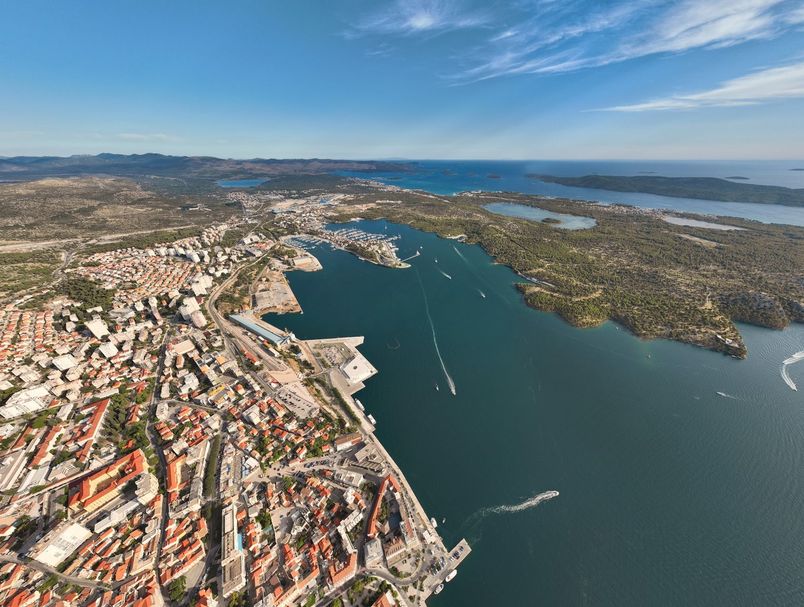
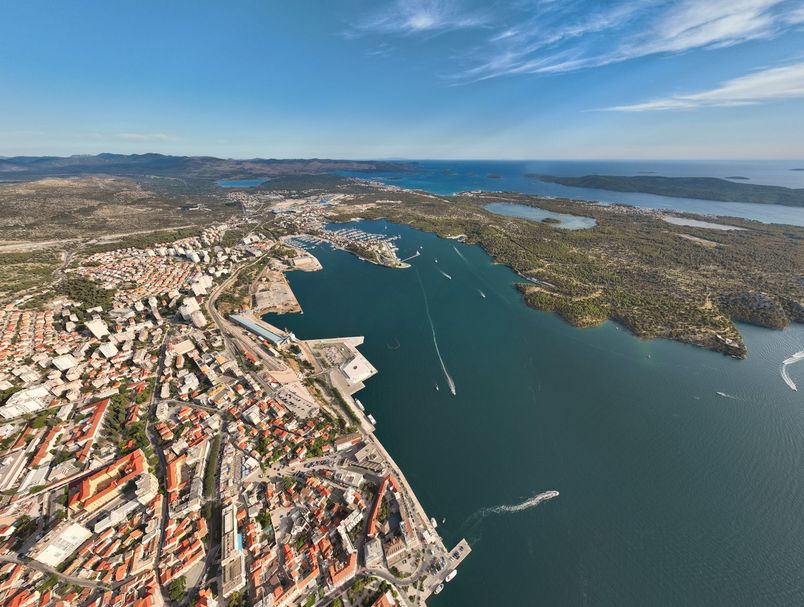
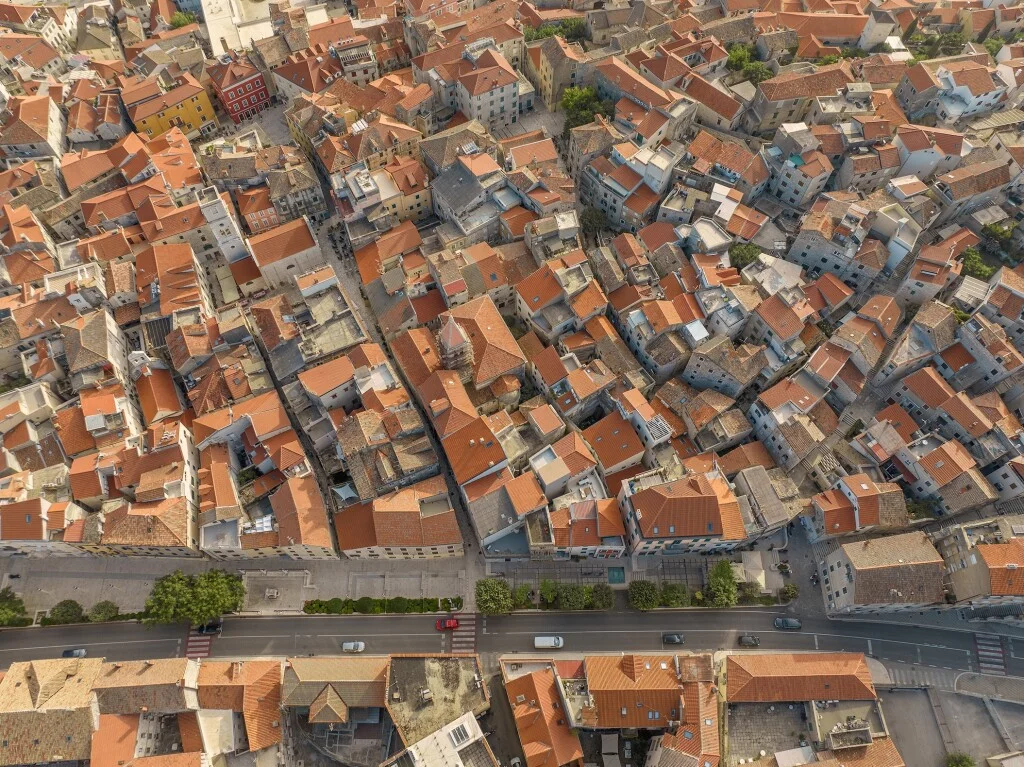
“The first impression from a bird’s-eye view takes your breath away – a network of narrow streets winding towards the fortresses, surrounded by the sea shimmering in the sunlight. From above, you can clearly see how the city grew and protected its borders over the centuries – from St. Michael’s Fortress to the mighty St. Nicholas Fortress at the entrance to the St. Anthony Channel.”
Šibenik – 3 (Photo: Boris Trogrančić)
A walk through the city reveals a different perspective – the Cathedral of St. James, a stone masterpiece listed as a UNESCO World Heritage Site; the narrow stairways inviting you to peek into hidden corners; and the picturesque waterfront, where the scent of the sea blends with the sounds of street cafés.
Šibenik is a unique story on the Adriatic – the oldest native Croatian city on the coast, first mentioned in 1066 in the charter of King Petar Krešimir IV. This historical imprint can be felt at every step, whether you are looking at the medieval walls or losing yourself in the colorful details of the old facades.
“This time, for me, Šibenik was also a city of music. The SatchVai concert brought virtuoso guitar tones that merged with the Šibenik night, creating an atmosphere not to be forgotten. The music and the city breathed together, and I tried to capture that energy through my photographs,” describes Boris Trogrančić, whose photos you can see in the gallery at the beginning of the article.
“Photographs from the air and the ground on this journey are not just images – they are fragments of my experience of the city. Šibenik is a place where past and present meet in a perfect frame, where the sea, stone, and people create a story worth telling again. Even though my visit was short, I am certain I will return to Šibenik again!” – beautifully described by Boris Trogrančić, who you can also follow on YouTube.